The Twin Cities Remodel Cost Planning Guide.
Real ranges for the work that actually moves money in a Twin Cities remodel: kitchens, baths, basements, additions, custom homes, and whole-home renovations. The cost drivers in order of impact. And the planning conversation that keeps the budget honest from day one rather than reckoning with it mid-construction.
Twelve sections · about a 12-minute read · save as PDF via your browser’s print dialog.
Why planning ranges matter more than per-square-foot rates
The first question on most remodel calls is some version of “What does a kitchen cost?” The honest answer is a range, not a number. Two kitchens with identical square footage can be $80,000 apart because one needed a load-bearing wall removed and the other didn’t. Two bathrooms can be $40,000 apart because one rebuilt the framing and waterproofing properly and the other tiled over old substrate. The per-square-foot rate that sounds clarifying at the first meeting is the same rate that ends up wrong by month three.
The point of this guide is to replace the per-square-foot question with a sharper one: which levers will this specific project pull, and how much do those levers actually move the budget? Once that conversation is clear, the cost range stops being a guess and starts being a plan.
Cost ranges by scope
Use these as planning ranges, not quotes. They reflect what serious remodels actually cost in the Twin Cities and West Metro right now: bungalows in South Minneapolis, ramblers in Edina and Roseville, family homes in Plymouth and Maple Grove, lake-corridor builds in Wayzata and around Lake Minnetonka.
| Scope | Planning range | What moves it up the most |
|---|---|---|
| Kitchen remodel | $60K – $400K+ | Structural openings · cabinetry tier · system updates · adjacent rooms |
| Bathroom remodel (primary) | $30K – $140K | Layout changes · custom tile/glass · waterproofing · footprint expansion |
| Bathroom remodel (hall/kids) | $20K – $65K | Plumbing relocation · tile complexity · vanity scope |
| Basement finishing | $80K – $400K+ | Moisture correction · room mix · theater/bar · walkout integration |
| Home addition | $200K – $1M+ | Foundation/site · roof integration · mechanical extension · exterior matching |
| Whole-home renovation | $400K – $3M+ | Structural scope · systems work · finish standard · phase logistics |
| Custom home | $1.4M – $5M+ | Site work · finish tier · long-lead selections · lake-corridor constraints |
The lower end of each range assumes the existing structure is mostly cooperating: sound systems, working drainage, simple footprints. The upper end assumes the project is doing real construction (structural moves, mechanical updates, custom millwork, higher finish standards). Most projects land somewhere in the middle. Most serious kitchens we plan, for example, land $90K–$240K even though the full range runs wider in both directions.
Kitchen budgets: the four levers
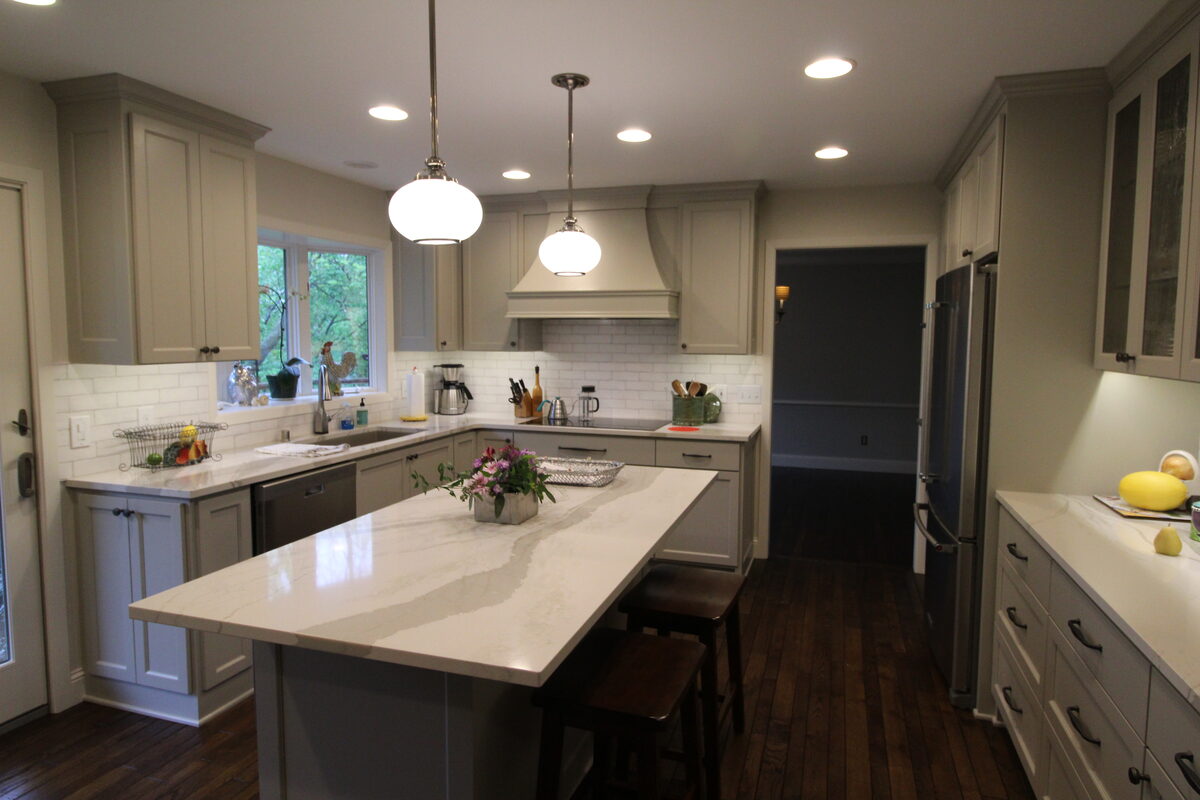
Most homeowners think the kitchen budget moves with cabinet brand and countertop. Those matter, but they’re usually third and fourth on the list. The four levers in order of impact:
- Structural work. Wall removal, beam placement, mechanical reroutes. The single biggest swing factor, commonly $20K-$60K depending on the wall and what runs through it.
- Layout-driven plumbing and electrical changes. Every fixture or appliance move adds cost downstream. A new sink location is rarely just a sink. It’s a sink, drain rerouting, supply lines, venting, and dedicated circuits.
- Cabinetry tier and configuration. Stock semi-custom to custom inset can run 2–3x for the same footprint. Panel-ready appliances, integrated coffee, dovetailed drawers, soft-close hardware throughout. Each adds real money.
- Countertop and tile selections. The visible line items most kitchen shopping starts with. Stone, quartz, and tile vary widely; the kitchen people see in the photo isn’t usually what makes the kitchen work.
Two kitchens with identical cabinet brands and the same countertop can be $80,000 apart because one needed a load-bearing wall removed and the other didn’t. The structural decision happens first, the budget conversation follows, and selections settle on top of a plan that’s already grounded.
Bathroom budgets: where the hidden work earns its keep
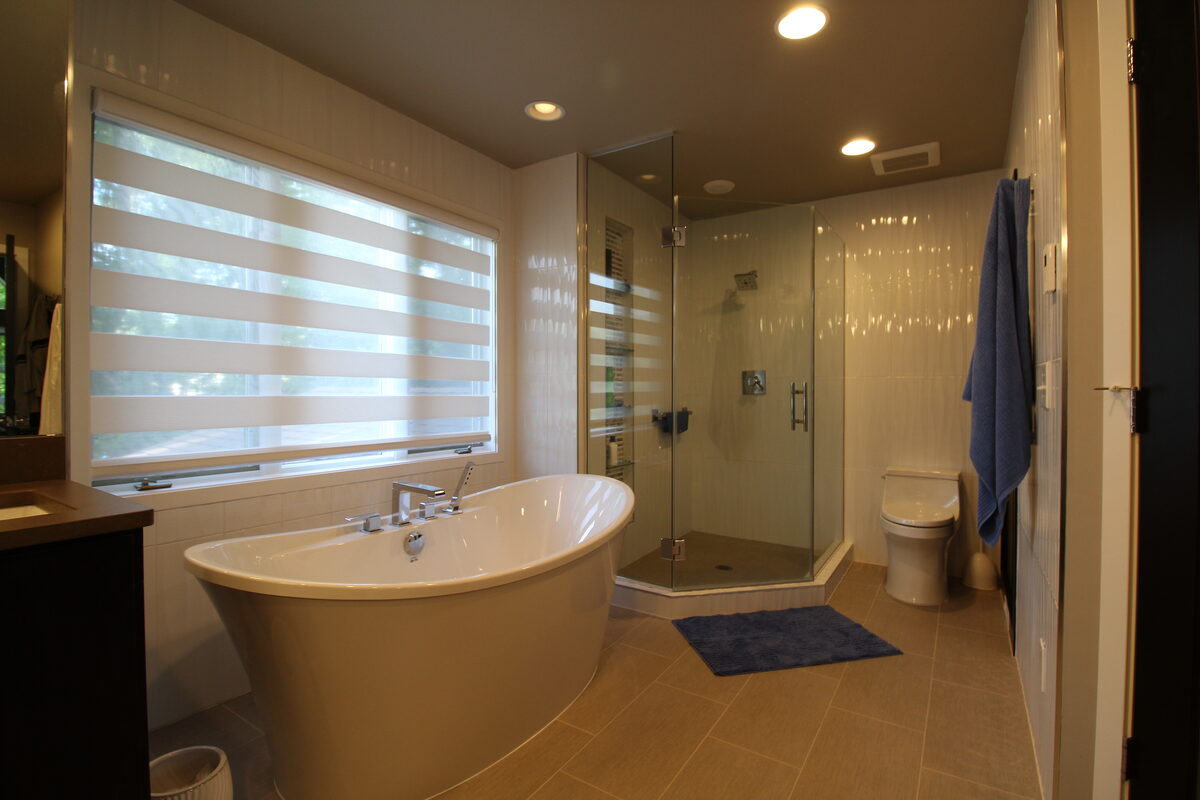
Bathroom budgets move with four levers too, but the order is different. Layout changes drive the biggest swings, especially anything that moves a toilet, drain stack, or load-bearing wall. Shower scope is second: a tile-set shower with a curbless threshold, custom glass, and a real waterproofing membrane is a meaningfully different number than a fiberglass insert. Substrate and behind-the-wall work is third, particularly in older homes. Tile and fixture tier is fourth.
The line item homeowners are most tempted to underweight is water management, and it is one of the details that determines how well a bath holds up. Tile and grout are not a waterproofing system on their own. The substrate, waterproofing assembly, shower-pan details, and any required testing should match the selected manufacturer’s instructions and the conditions in the room. Those are the parts of the bath that don’t photograph but still matter years later.
Basement finishing: five conditions that set the honest budget
The pre-finish inspection is where the honest basement budget gets set. We walk five conditions before any design decisions land:
- Moisture history. Where has water been, where might it go again, what does the existing sump and drain-tile setup actually do?
- Ceiling height and beam rhythm. A basement with 8-foot ceilings finishes differently than one with 6′10″ under ducts. Older Minneapolis basements often need ceiling-height honesty.
- Mechanical layout. HVAC trunks, water-heater clearance, electrical panel access, plumbing rough-ins for an added bath.
- Egress and code compliance. Bedroom egress windows, stair-handrail compliance, smoke-and-CO requirements.
- Structural condition. Foundation cracks, sill plates, joist health.
If any of those five comes back yellow or red, the right move is to address it before finishes get planned, not after. A finished basement built over a moisture problem is now a problem hidden behind drywall. A theater designed around a soffit run that wasn’t mapped is a sight line that can’t move without rework.
Once the conditions are clear, the room mix matters more than the finish materials. Theater, bar, guest suite, fitness, office, play, storage: these need traffic, sight lines, sound isolation, and mechanical access agreed on before millwork drawings happen. A basement that gets the room mix right reads like a real floor. One that doesn’t reads like a basement with nicer finishes.
Additions: five cost drivers in order of impact
Additions don’t price on square footage alone. The five biggest cost drivers, in order:
- Foundation and site work. Footing depth, frost protection, drainage, grading, and whether the existing foundation needs reinforcement. Two visually similar lots can produce $100,000 of cost difference here alone.
- Roof integration. Matching pitch, valleys, dormers, and how the addition’s roofline ties into the existing one without looking bolted on.
- Mechanical extension. HVAC zoning, electrical service upgrade, plumbing rough-ins, and whether the existing systems can carry the new load.
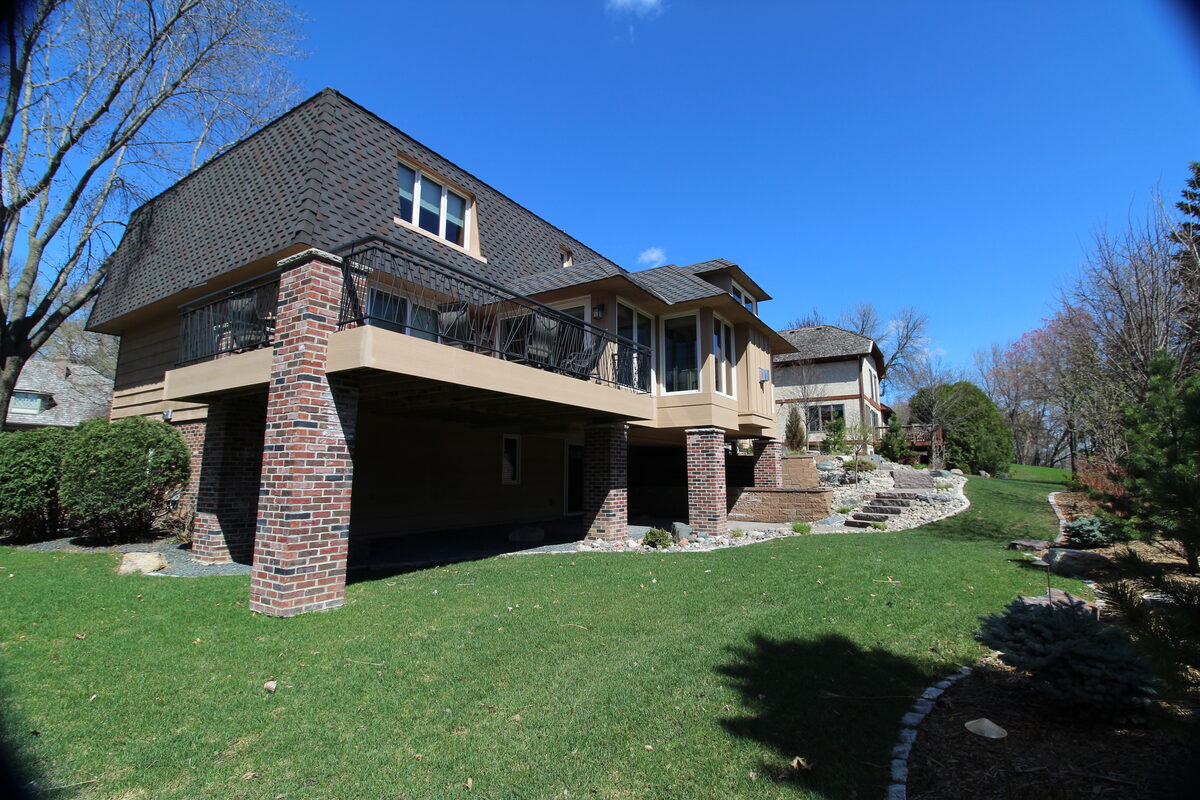
- Exterior matching. Siding, masonry, trim, window choice. These are the parts that decide whether the addition reads as part of the house.
- Interior connection. The wall removed between old and new, the threshold transitions, the floor-level alignment.
For lake-corridor or environmentally sensitive lots in Lake Minnetonka, parts of Wayzata, and certain Plymouth and Eden Prairie addresses, add a sixth category: permit complexity. OHWL setbacks, shoreland overlay, impervious surface limits, stormwater management, and floodplain checks can all reshape what’s possible. These reviews don’t add finish budget directly, but they extend the design timeline and sometimes the addition footprint itself.
Whole-home renovation: one-pull versus phased
Most whole-home renovations come down to one decision early: one-pull (move out, take the house apart, rebuild it as a coordinated whole) or phased (live through it, run kitchen, baths, primary suite, and lower level as sequenced projects across several years). Both work. They’re different projects with different cost curves, different total budgets, and different stress profiles.
One-pull renovations are typically 10–20% cheaper in absolute terms because trades aren’t mobilizing and demobilizing for separate phases, finishes get specified together as one material story, and structural and mechanical work happens once instead of being reopened. The cost is that the family relocates for six to twelve months.
Phased renovations let the family stay in the house but require harder planning discipline. The kitchen done in year one has to anticipate the primary suite done in year three. Cabinet profiles, trim language, hardware finishes, and floor materials all need to be set early or the house starts looking like a tour of different decades. Phase one decides phase two, which decides phase three. We’d rather sit down for a long conversation about long-term finishes than execute a kitchen that the next phase has to fight against.
Custom homes: where the budget actually gets shaped
A custom home budget is shaped less by the per-square-foot rate and more by a sequence of decisions that happen long before footings get poured:
- The site itself: grade, drainage, access, soils, utilities, view orientation, OHWL setbacks on lake corridors.
- The foundation and envelope strategy: slab vs. crawlspace vs. basement, framing approach, insulation continuity, exterior cladding logic, window package.
- The interior plan and how it lives: open vs. defined rooms, primary-suite scale, kitchen sizing, lower-level program, garage relationship.
- The finish standard: cabinetry tier, stone strategy, tile direction, lighting plan, hardware family.
Site work alone can shift a budget by $100,000 or more between two visually similar lots. A walkout lot with good drainage is a different starting line than a slope-side build that needs a retaining wall, a daylight basement, and extensive grading. Foundation strategy follows from the site. Sometimes a slab makes sense and sometimes the lot demands a full basement, and the foundation decision sets the framing approach, mechanical layout, and how the lower level can be used. These three decisions compound. Finish standard is the variable homeowners can dial up or down with the most flexibility, but only after the first three categories are set.
Twin Cities market notes: what changes by city
Cost ranges shift by city. A few patterns worth knowing if your project sits in one of these markets:
Minneapolis
Character-home stock: bungalows, foursquares, Tudors, stucco two-stories. Selective opening usually beats wholesale reinvention. Systems work behind the plaster is usually a meaningful piece of the budget. Most serious kitchen remodels land $90K–$240K. Whole-home renovations $400K–$1.4M.
Edina, Wayzata, Lake Minnetonka
Higher finish standard expected. Lake-corridor work involves OHWL setbacks, shoreland overlay, and site math. Edina kitchens land $130K–$300K. Lake Minnetonka kitchens $140K–$320K. Wayzata custom homes start around $2M.
Plymouth, Maple Grove, Eden Prairie
Newer family-suburban stock. Often the question isn’t “is the house big enough” but “why doesn’t this much square footage work?” Basement finishing and kitchen-family wall removal are the highest-leverage moves. Most kitchens land $90K–$220K. Basements $100K–$260K.
Golden Valley, St. Louis Park, Roseville
Mid-century and prewar stock. Restraint and disciplined scope tend to age better than aggressive overlays. Older basements and systems often need correction first. Kitchens $80K–$220K. Basements $80K–$240K.
Stillwater, Woodbury, Lakeville, Eagan
East- and south-metro mix of newer family homes and older central neighborhoods. Strong fits for basement finishing, kitchen reconfiguration, primary baths, and four-season rooms. Kitchens $90K–$260K. Basements $100K–$260K+.
The hidden-conditions conversation
Hidden conditions are the single most common reason two proposals end up costing different amounts at the end of the project, even when they looked similar at signing. A proposal that pretends framing, wiring, plumbing, drainage, and insulation are all going to be fine is making a guess that’s usually wrong on an older home. A proposal that names a process, such as a hidden-conditions allowance, a procedure for change-order review, or a written framework for who decides what when something unexpected shows up, is making a more honest commitment.
Ask each bidder how they handle three specific scenarios: a structural surprise during demolition, an electrical issue that triggers a panel upgrade or partial rewire, and a moisture or framing-rot discovery once walls open. The answers tell you more about how the project will actually run than any line item in the bid.
How to read allowances honestly
Allowances are one of the easiest places for two proposals to look comparable while actually budgeting for very different outcomes. A tile, countertop, plumbing fixture, or cabinet allowance that’s far below the finish level the homeowner expects can keep the bid number looking attractive early. It doesn’t keep the project inexpensive later.
A smarter comparison asks whether both proposals are budgeting for roughly the same quality level. If they aren’t, the totals aren’t being compared honestly yet. Three patterns to watch for in any allowance line:
- Round numbers. A tile allowance written as “$10/sf” without naming the install standard or a specific product range. That’s often a placeholder, not a plan.
- Mismatched tiers. $40K cabinet allowance paired with a $4K tile allowance in the same kitchen. The cabinet line is realistic; the tile line is below what the rest of the kitchen will demand.
- Unstated assumptions. Allowances that don’t name installation, edge profiles, fabrication, or freight. Those costs are real and they’ll show up in change orders.
The first-call planning conversation
If you’re scoping a Twin Cities remodel and want to test the budget conversation before committing to drawings, the most useful early call covers four things:
- What problem the remodel is actually solving. The layout problem, the finish problem, the systems problem, the space problem, or some mix.
- How long you plan to stay. A two-year project plan looks different than a fifteen-year one. Phasing options depend on this.
- The constraints you already know about. Lot, footprint, neighbors, schedule, family timing, budget ceiling.
- The decisions you don’t want to make twice. Cabinet profile, trim language, finish standard, the parts of the house you want left alone.
Once those four are honest on the table, the cost range stops being a guess and starts being a planning conversation we can actually have.
Want to talk through a specific project?
Whether your remodel is at “just starting to think about it” or “reviewing two proposals,” we’d rather have an honest scope conversation than send a generic pitch.
Kuechle Construction Co. · 15500 9th Ave N, Plymouth, MN 55447 · (763) 210-8272 · Minnesota licensed residential building contractor BC005774 · Family-owned since 1974.