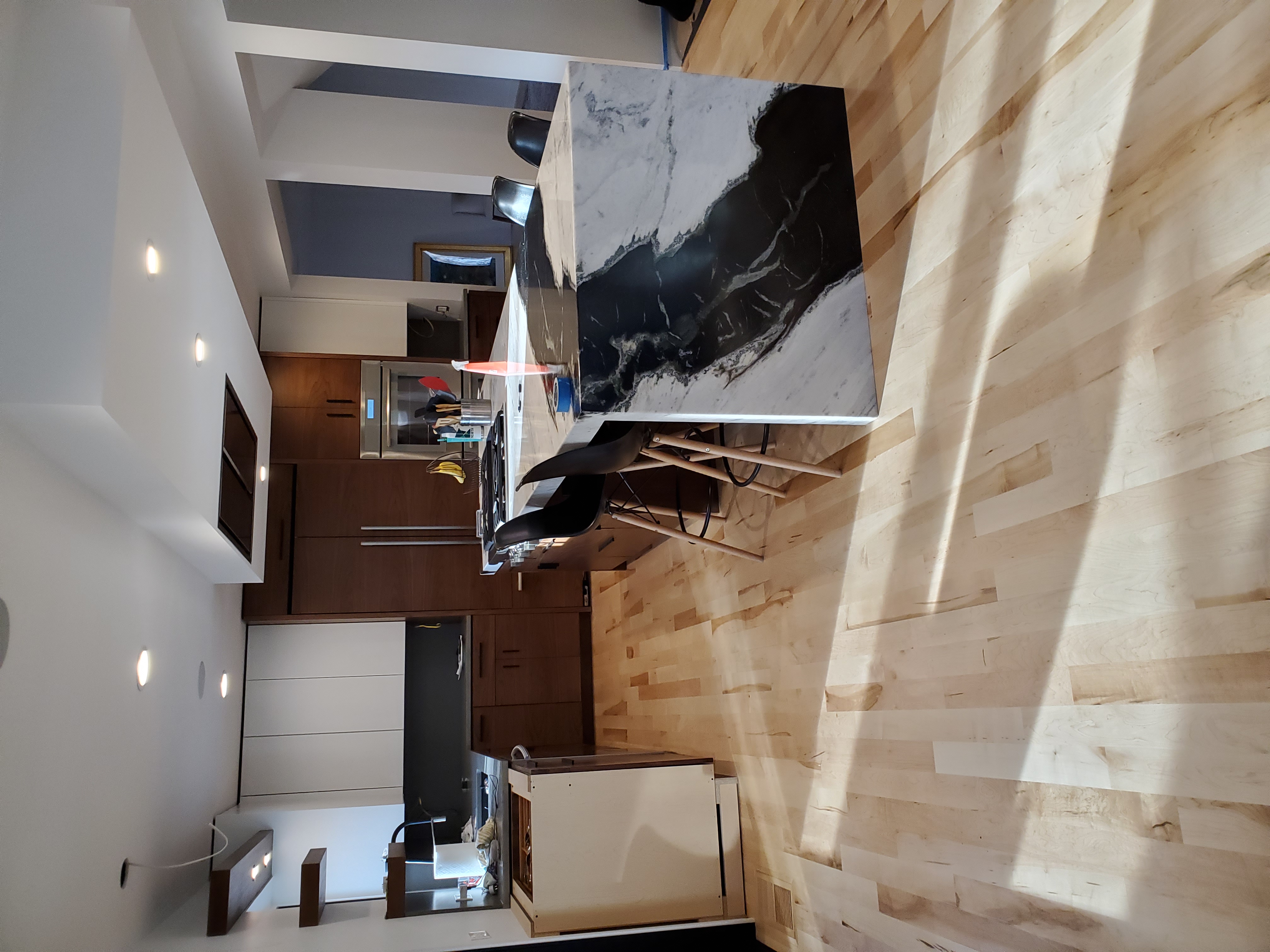
Whole-home renovation

Major renovation that makes the entire house work better.

Whole-home projects ask for more than isolated craftsmanship. They ask for sequencing, systems thinking, structural judgment, and a finished result that feels coherent instead of patched together.

Whole-home remodel by Kuechle Construction Co.
Good whole-home work improves movement, comfort, and clarity across the house, not only in one room.
Why it is different

Everything affects everything in a whole-home renovation.

Layout changes, structural openings, mechanical updates, finish continuity, and occupied-home logistics all push on each other. That is why large renovations benefit so much from planning discipline and clear priorities.

Where the value comes from
  • Better circulation and room-to-room flow
  • Consistent finish language across the home
  • Fewer downstream resets because the job was sequenced early

Best fit

Who whole-home renovation usually serves best.

These projects work best for homeowners who know the house is worth staying in, but the current layout, systems, or finish continuity are no longer doing the job.

Older homes

Homes that need system and layout correction together.

Older Minneapolis homes often reward coordinated structural, mechanical, and finish planning more than piecemeal room-by-room work.

Long-view owners

Families planning around how they actually want to live.

The strongest projects start with circulation, comfort, and household rhythm, not only a collection of prettier rooms.

Phased complexity

Owners who need better sequencing, not just more labor.

When multiple rooms and systems move together, the project quality depends as much on sequencing as it does on craftsmanship.

What gets decided early

Whole-home planning should settle the hard questions before the field is asked to absorb them.

  • What stays, what moves, and which structural changes actually matter
  • How systems, insulation, and air-sealing work affect later finish choices
  • Whether the project should be phased or handled as one continuous renovation
What homeowners feel later

The finished house should read as one decision, not a stack of disconnected rooms.

That coherence usually comes from restraint, repeated material language, and better room-to-room judgment, not from making every space louder than the last.

See related proof in the modernized whole-home remodel case study.

Need clarity first

Use the early phase to test the real shape of the project.

Whole-home work gets more successful when priorities, scope boundaries, and investment realities are brought into the open before the field starts moving.

CallStart Your Project