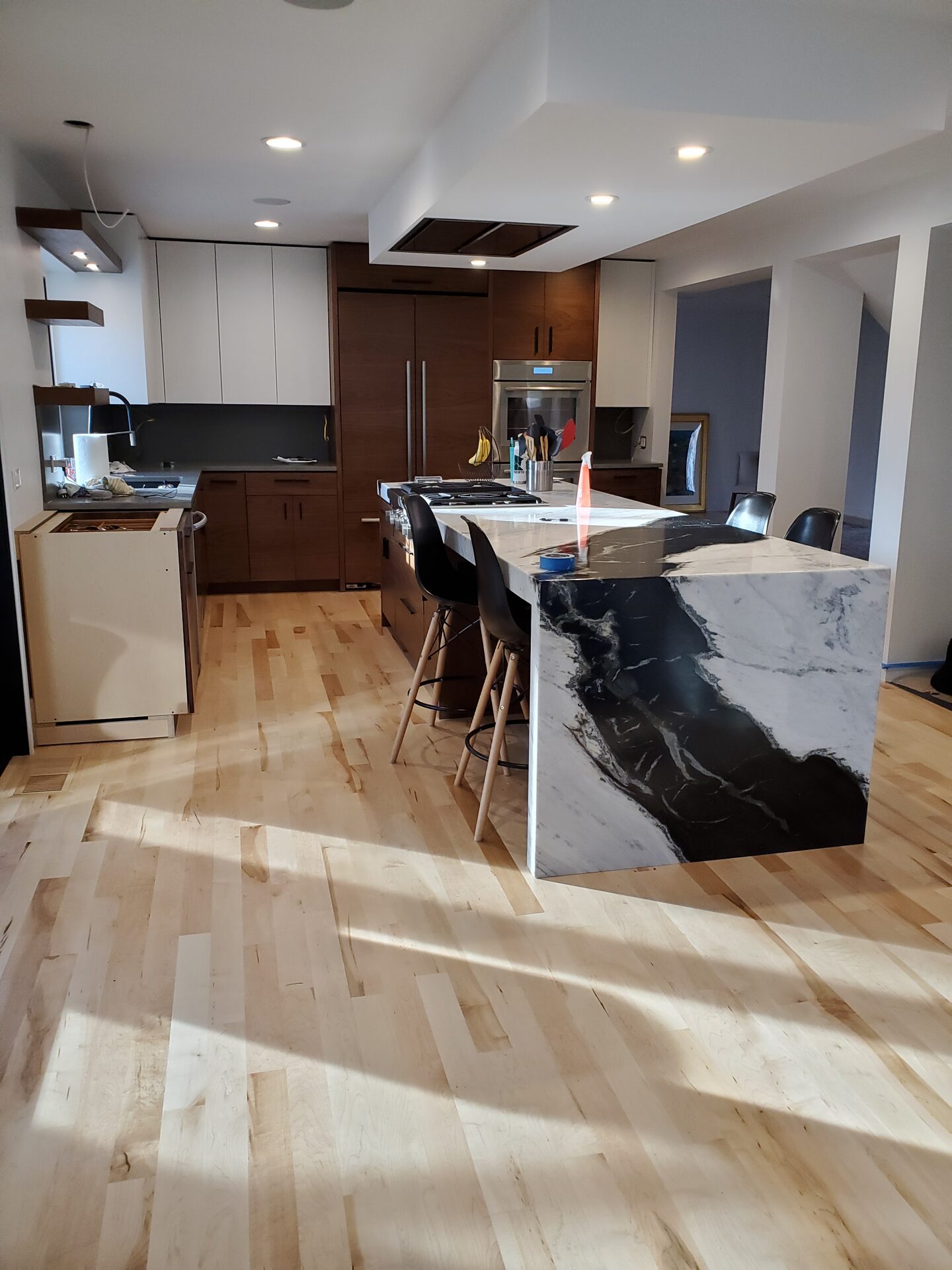
Homeowners often reach this question after years of partial compromises. The kitchen works, but not well enough. The main floor feels chopped up. Storage is poor. Bedrooms are tight. The house may still sit on the right street, in the right school area, near the right routines. That's why "just move" is usually more emotionally simplistic than it sounds.
A practical cost comparison
The clean answer is not "renovation is cheaper" or "moving is cheaper." It depends on what is wrong with the current house and what it would cost to buy into a better one.
| Path | Typical planning range | What to include |
|---|---|---|
| Focused renovation | $400,000-$800,000 | Kitchen, baths, layout corrections, lighting, flooring, selective systems, and finish continuity. |
| Comprehensive renovation | $800,000-$1.5M | Major layout work, multiple rooms, structural changes, exterior or mechanical scope, higher finish level. |
| Extensive renovation | $1.5M-$3M+ | Deep reconfiguration, additions, higher-tier finishes, complex site or structural conditions, near-custom-home finish standards. |
| Moving instead | Often 8%-12%+ of the new purchase price before updates | Closing costs, commissions, rate changes, moving, furnishing, repairs, and the remodels the next house still needs. |
Moving has visible costs and hidden costs
Purchase price, closing costs, interest rate changes, moving logistics, new furnishing needs, and post-purchase updates all matter. Beyond those, there is also the cost of starting over in a house that may still need work. Many homeowners find that a new house solves some frustrations while introducing new ones they couldn't fully see in a fast-moving market.
Renovation works best when the house already has strong fundamentals
If you like the lot, the neighborhood, the orientation, and the broad bones of the home, renovation can often make more sense than moving. That doesn't mean renovation is always cheaper. It means the money is being invested into a location and house you already know has long-term value to you.
What renovation can and can't solve
A whole-home renovation can dramatically improve layout, storage, finish quality, lighting, circulation, and how the house supports daily life. It can't make a fundamentally wrong lot become the right lot. It can't move the school district. It can't create a different street context. That's why the decision should start with what you truly want to keep.
Use the decision as a filter, not a debate
The most useful question isn't "which option is cheaper?" It's "which path gets us to the life we want, with the least regret?" For some homeowners, that answer is renovation. For others, it's clearly moving. A thoughtful builder can help you understand the renovation side honestly, which makes the final decision sharper whether you stay or not.
- If you love the neighborhood and broad bones of the house, renovation deserves serious analysis.
- If the lot, location, or overall home structure is fundamentally wrong, moving may be the cleaner choice.
- If the decision feels emotionally tangled, a real scope and feasibility conversation can make it more concrete.
Common stay-or-move questions
Is renovating cheaper than moving?
Sometimes, but not always. Renovation should be compared against the real cost of moving: transaction costs, interest-rate changes, furnishing, repairs, and updates the next house still needs.
What does whole-home renovation cost?
Focused whole-home work often runs $400,000 to $800,000. Comprehensive renovations often run $800,000 to $1.5M. Extensive or complex work can reach $1.5M to $3M+.
When is moving the cleaner answer?
If the lot, street, school district, broad structure, or orientation is wrong for the long term, moving may be wiser than investing heavily in a house that cannot become what you need.
Official planning references
A renovate-or-move decision should still account for permit review, building requirements, and licensed contractor scope. These references help ground the renovation side of the comparison.
Clarify the decision
Talk through the renovation side before assuming the answer is to move.
We can help you evaluate what the current house could realistically become, and whether that path makes sense for your goals and investment level.