Minneapolis remodeling

Minneapolis homes reward thoughtful renovation.

Character houses, tighter city lots, and older layouts create a very specific kind of project in Minneapolis. The work tends to go better when the builder understands not just the finished look, but the structure, sequence, and tradeoffs that make the house work better for real life.

South Minneapolis stucco-and-brick two-story front elevation after renovation
Minneapolis projects reward builders who know what to expect inside the walls, not just what to put on top of them.
The housing stock changes the conversation

Older Minneapolis homes need a different starting question.

A craftsman bungalow, a stucco two-story, or a brick four-square is a different project than a 2010s suburban build. The framing is older, the plaster behaves differently than drywall, the original wiring may be knob-and-tube or early Romex, the plumbing might be cast iron or galvanized. The right project starts with an honest evaluation of what's behind the finish, not just what gets installed on top of it. The renovations that fail in Minneapolis are almost always the ones that assumed the old house would behave like a new one.

Best-fit Minneapolis scopes
  • Whole-home renovations of older character homes
  • Kitchen reconfigurations with selective wall removal
  • Primary bath additions or rebuilds in older floor plans
  • Lower-level finishing after moisture and ceiling work
  • Selective additions that respect original rooflines and exterior language

Kitchens

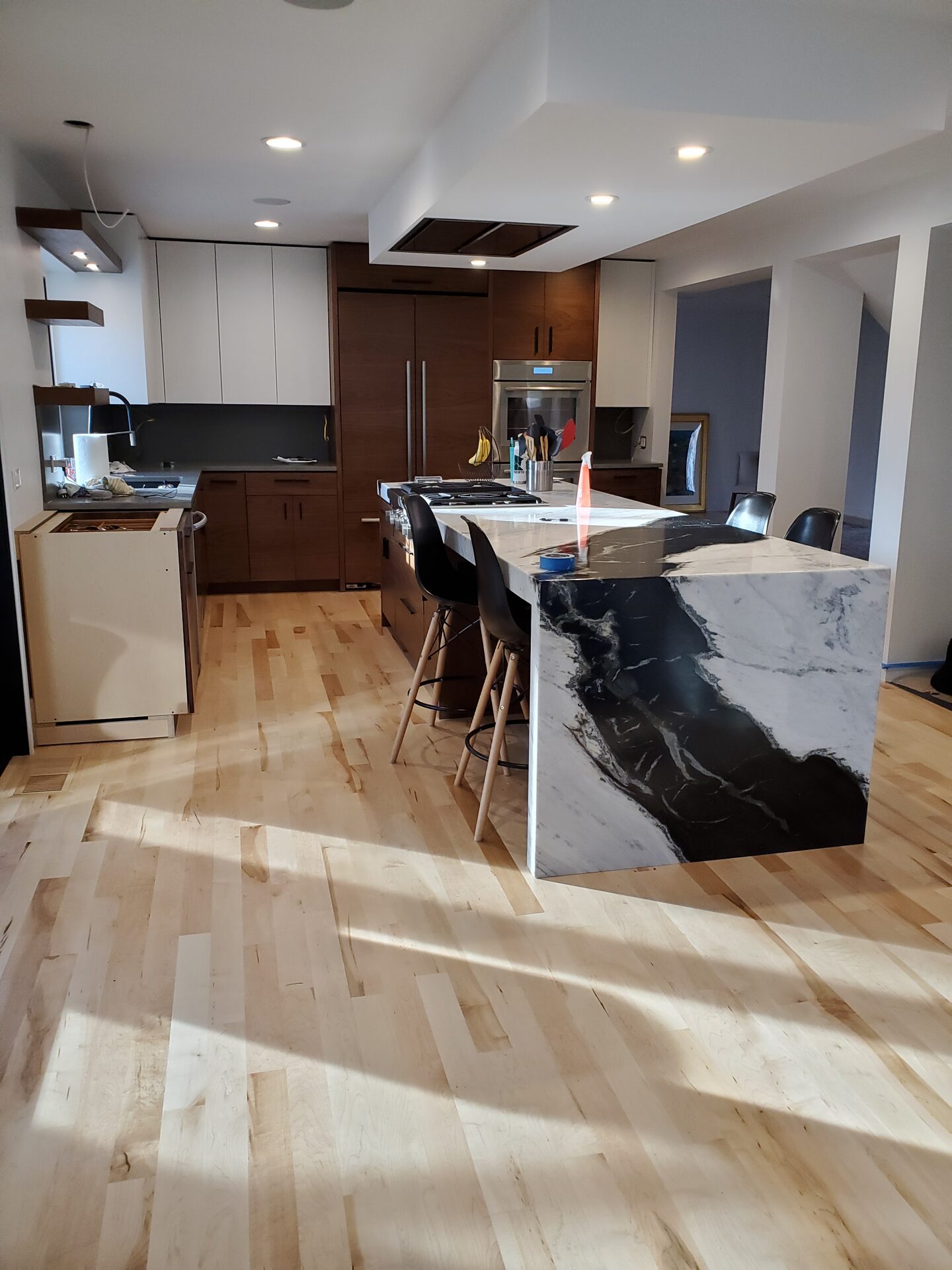
Kitchen remodeling in Minneapolis.

Minneapolis character-home kitchens were built when the kitchen was a work room, not a gathering room. The remodel that works usually opens the kitchen selectively to the dining or family side, updates the systems behind the walls, and chooses cabinetry that respects the era of the house.

Selective opening

The right amount of openness in an old house.

Most older Minneapolis kitchens benefit from a half-wall or wider doorway rather than complete plan-flat openness. The original architecture suggests how open the kitchen should be if you let it.

Plumbing and electrical

The systems behind the walls usually need work.

Updating the kitchen is the right moment to bring electrical and plumbing up to current spec. Older Minneapolis homes often need panel work and supply-line replacement during a kitchen project.

Realistic ranges

Most Minneapolis kitchens land $90K–$240K.

Refresh-only scopes can come in lower. Layout reconfiguration, structural openings, system updates, and premium cabinetry move the number higher.

Bathrooms

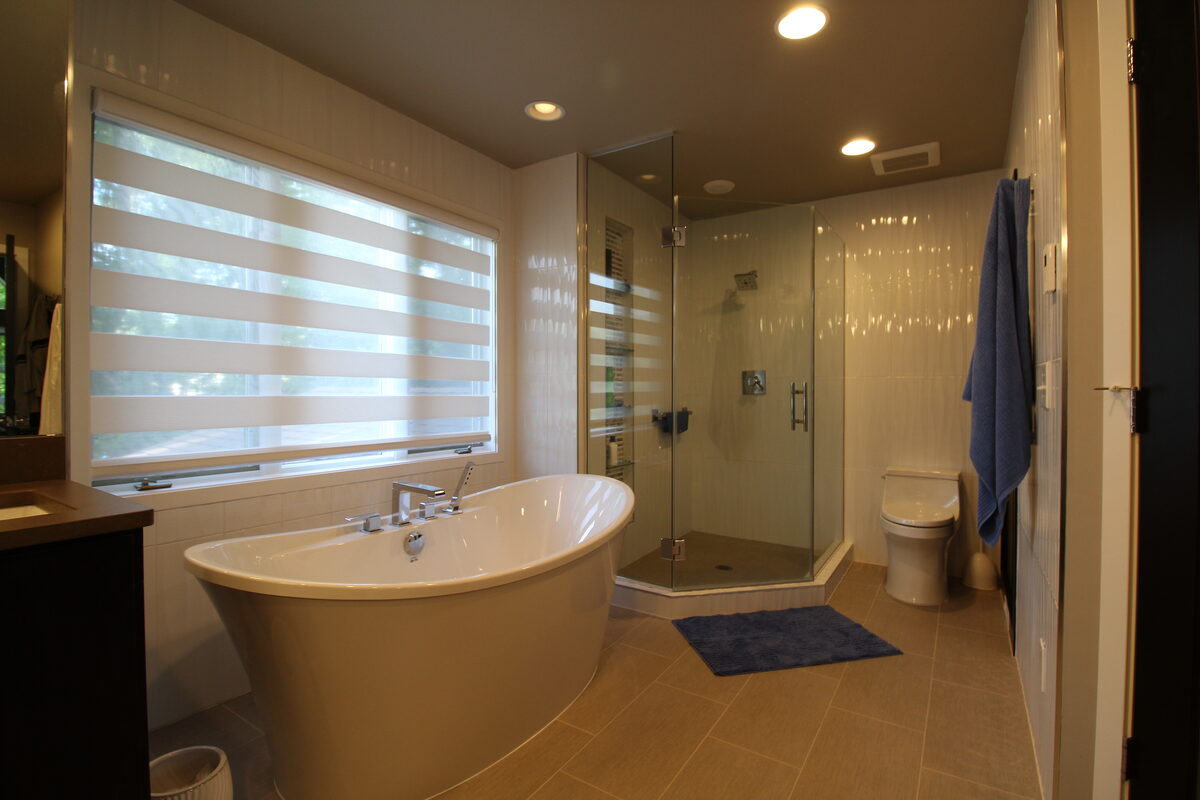
Bathroom remodeling in Minneapolis.

Older Minneapolis primary baths are usually small and were often added decades after the original construction. The remodel either expands by borrowing adjacent space or rebuilds within the existing footprint to a much higher standard. Both can work; the choice depends on what's structurally available.

Borrowing adjacent space

From a closet, hall, or back bedroom.

Many older Minneapolis primary baths can grow by 30 to 60 square feet by absorbing adjacent space. Plumbing rerouting, structural review, and finish-coordination need to be planned together.

Plaster and substrate honesty

Old walls behave differently than new ones.

Removing plaster, evaluating original framing, and reframing for modern bath fixtures takes more time than the same work in newer construction. The schedule should reflect that.

Realistic ranges

$30K–$120K for primary, $20K–$50K for hall.

Within-footprint rebuilds tend to land lower; expansion projects with structural and plumbing rework run higher. Premium tile and glass push toward the top.

Basements and lower levels

Basement finishing in Minneapolis.

Older Minneapolis basements need a more honest pre-construction conversation than newer ones. Drainage, moisture, vapor strategy, and ceiling height all need to be addressed before finishes get touched. Done right, the lower level becomes real living space.

Moisture and drainage first

The water plan comes before the finish plan.

Most older Minneapolis basements need drainage upgrades, vapor strategy, and sometimes perimeter waterproofing before finish work makes sense. We diagnose what the basement is doing and design around it.

Ceiling and beam reality

The lowest beam decides the room.

Minneapolis basement ceilings are often tighter than newer construction. We measure honest clearance under beams and main runs, then plan finishes around what's actually there.

Realistic ranges

Most Minneapolis basements land $90K–$220K.

Older homes needing moisture or mechanical correction first run higher. Premium millwork and theater builds push toward the top of the range.

Additions

Home additions in Minneapolis.

Minneapolis additions live or die by exterior integration. The character-home neighborhoods reward additions that disappear into the original architecture and penalize ones that don't. Roofline, material match, and trim profile detail are make-or-break.

Back-of-house additions

Family room, mudroom, or kitchen-side bump.

Most Minneapolis additions happen at the back of the house: family room expansions, mudroom additions, kitchen-side bumps. Side-yard setbacks usually constrain other directions.

Second-story additions

Building up where the lot can't grow out.

On smaller Minneapolis lots, second-story additions or dormer expansions often produce more usable space than ground-floor additions. The roofline integration has to be designed with the original house in mind.

Permit reality

Minneapolis is detailed but workable.

Setback, lot coverage, side-yard, height limit, and historic district overlays (where applicable) all shape what's buildable. We pull Minneapolis permits regularly and know which steps need patience.

Minneapolis neighborhoods we know well

Where most of our Minneapolis work happens.

Linden Hills, Fulton, Tangletown, Lynnhurst, Kenwood, Lowry Hill, the Wedge, and the broader South Minneapolis character-home neighborhoods. We know which streets have which housing eras and what to expect inside the walls.

Why permit timing matters more here

The Minneapolis permit calendar drives the project schedule.

Minneapolis review and inspection paths are real. We sequence permits, structural review, and inspection windows into the project schedule from the start, not around it. Knowing the city's rhythm is part of why our older-home projects don't slip.

Useful next pages for Minneapolis homeowners

The closest matches for what most Minneapolis projects become.

If you're sorting where the project really belongs, these pages connect a Minneapolis idea to the relevant proof and service depth.

Project proof

Linden Hills Whole-Home Renovation.

A Minneapolis character-home renovation where the original architectural language was protected while the systems and finishes got brought current.

Open Case Study
Coordinated scope

Whole-home renovation as one project.

Most Minneapolis older-home renovations work better as a single coordinated project than as a sequence of room remodels.

Whole-Home Renovation
Permit guide

Do I need a permit for a Minneapolis remodel?

What triggers a Minneapolis remodel permit, what usually doesn't, and why skipping a required permit creates problems at resale.

Read the Permit Guide

Local service area

Minneapolis remodeling and renovation.

Kuechle Construction serves Minneapolis from our Plymouth office, about fifteen minutes west of downtown. The map's here for orientation; the better next step is usually a scope conversation.

Minneapolis questions we hear often

What homeowners ask before scope is set.

The most useful early Minneapolis conversations are about the older-home reality, permit timing, and how the renovation should respect what's already there.

Why are older Minneapolis homes harder to remodel than newer suburban builds?

Older Minneapolis homes have framing irregularities, original electrical and plumbing that needs evaluation, plaster walls that respond differently than drywall, and structural conditions that newer construction doesn't have. The work goes better when the contractor expects those conditions instead of being surprised by them.

How do Minneapolis remodel permits work?

Minneapolis requires permits for most structural, plumbing, electrical, and mechanical work. The permit office, inspection routes, and submittal expectations have their own rhythm. We've pulled hundreds of Minneapolis permits and know which paths move quickly and which need patience.

What does a Minneapolis whole-home renovation cost?

Most Minneapolis whole-home renovations land between $400,000 and $1.4M depending on size, finish tier, and how much structural and mechanical work is involved. Older homes with original systems usually need updates that bundle well with the renovation scope.

Can older Minneapolis homes be opened up without losing character?

Yes, when the work is selective. The strongest character-home renovations open the kitchen-to-dining or kitchen-to-family connections while leaving the original architectural language elsewhere intact. Selective opening usually beats plan-flat openness on these houses.

Which Minneapolis neighborhoods do you work in most?

Linden Hills, Fulton, Kenwood, Lowry Hill, the Wedge, Tangletown, Lynnhurst, and the broader South Minneapolis character-home neighborhoods. We also work in north Minneapolis when the project is a strong fit.

Next step

If the house has character worth keeping, the renovation should reflect it.

We can pressure-test scope, system condition, and how the project should respect the original architecture before drawings get expensive. Older Minneapolis homes deserve a builder who plans for what's actually behind the walls.

CallTell Us About Your Project