- Primary suite additions and bedroom-wing expansions
- Family room and great-room additions
- Mudroom, back-entry, and garage-passage additions
- Screened porches, sunrooms, and four-season rooms
- Second-story additions and dormer expansions
- Bump-outs that fix specific room-size problems
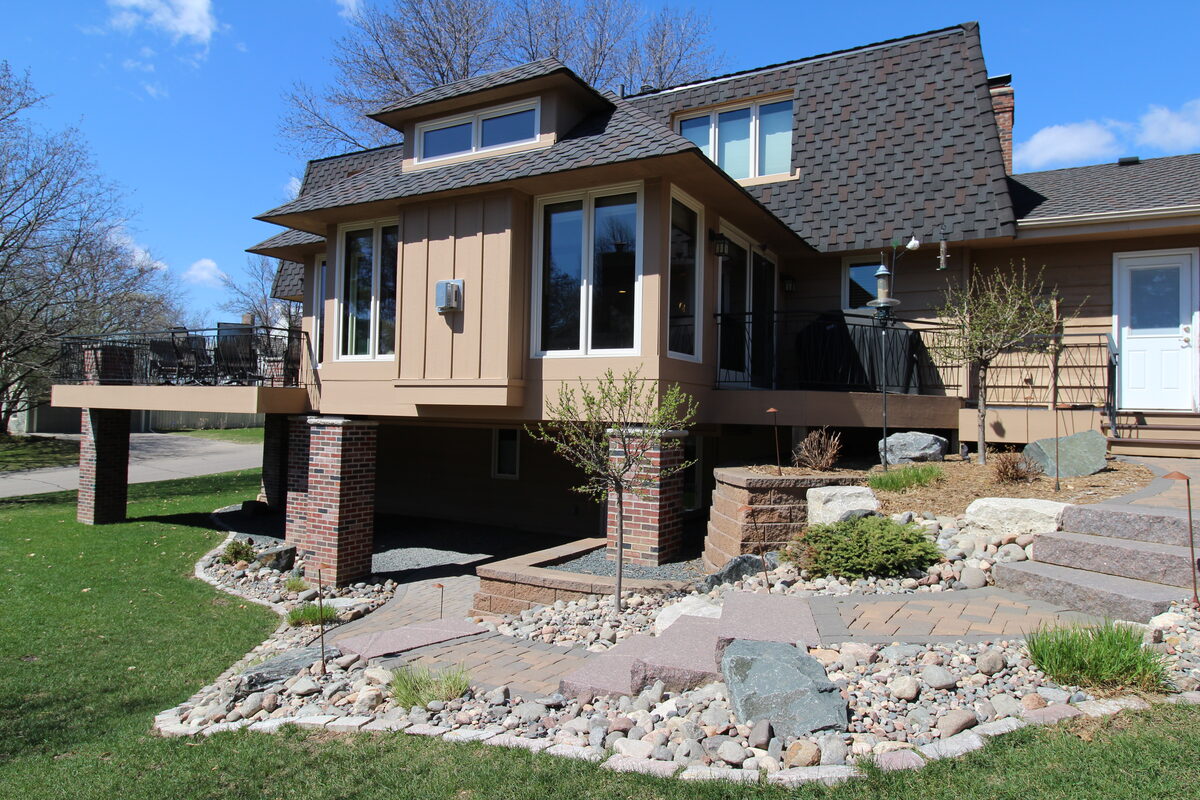
Home additions that feel like they belong to the original house.
More room, done right. We build additions that improve the house without looking stapled on. Proportion, exterior material, circulation, and how the new space actually lives, all planned together.
The cleanest additions look like they've always been part of the house. That requires honest work on roofline geometry, exterior material continuity, foundation step detail, and how the new rooms read from the curb and from the back. The exterior conversation has to happen before the floor plan locks, because exterior decisions usually constrain interior layout more than the other way around.
Why additions disappoint
Additions go wrong when they get planned as new construction with an old roofline next to it.
The hardest part of an addition is making it disappear into the existing house. Most disappointments trace back to one of the patterns below — usually visible from the curb the day the project finishes.
The addition you actually need is often smaller than the one you started planning.
Many homeowners come in wanting more space, then realize a layout fix would solve more problems for less money. We test that question first, before drawings get expensive to revisit.
Roofline, window, and siding decisions decide curb appeal.
An addition that doesn't match the original roof pitch, window proportion, trim profile, or siding pattern reads as added on from the street, no matter what the interior looks like. We resolve those decisions early.
Existing HVAC, plumbing, and electrical may not stretch.
Adding a primary suite often means re-balancing or upsizing the heating and cooling system. Adding a wet area means evaluating drain capacity. Treating the mechanical scope as last-mile work usually creates rework.
Scope and budget orientation
What a Twin Cities home addition actually costs.
Addition cost varies more than almost any other project type because the structural and site work change so much by case. The ranges below are construction-side and exclude design fees, major site work, and any work on the existing house outside the addition footprint.
A few feet to a small new room.
Kitchen bump-outs, mudroom additions, and small primary-closet expansions. Often $150,000 to $300,000 depending on structural complexity and finish level.
Family room, primary suite, or major bedroom-wing extension.
A new full room or suite with foundation, framing, and roof tie-in to the existing house. Often $300,000 to $600,000 depending on size, finish level, and how complex the integration is.
Adding upward, or adding deeply integrated space.
Second-story builds, full primary-suite-plus-family-room additions, or additions that require significant restructuring of the existing home. Often $600,000 to $1.5M or more.
Where addition decisions get made
The hard decisions belong before the contractor pricing call.
An addition is one of the few projects where the planning and the building are roughly equal in difficulty. Skipping the planning side is what produces additions that look stapled on, cost more than they should, or never quite work the way the family hoped.
The site has a vote before the design does.
Setbacks, easements, lot coverage, drainage, and grade all influence what the addition can be. Resolving those constraints early protects the design from being redrawn after permits.
How the addition meets the existing house matters most.
The right roofline, foundation tie-in, and wall plane decisions are what make an addition look like part of the original home rather than a new building bolted on.
HVAC, plumbing, and electrical loads need to stretch.
A larger house needs to be heated, cooled, and powered as a single system. Existing equipment often needs to be rebalanced or replaced, not just extended into the new space.
Home addition FAQ
Questions homeowners usually ask before drawings start.
The most useful early conversations are about what the addition really needs to solve, what it'll cost, and how it'll connect to the house you already love.
What does a home addition cost in the Twin Cities?
Contained bump-outs and small additions often run $150,000 to $300,000. Full family-room or primary-suite additions usually land $300,000 to $600,000. Second-story builds and highly integrated additions can reach $600,000 to $1.5M or more depending on structural and site conditions.
How long does an addition take?
Most additions run 6 to 12 months from design start through closeout. Permit time, weather windows, structural complexity, and how cleanly the addition ties into the existing home all affect the schedule.
Do we need to move out during the addition?
Most families stay. We dust-control the construction zone, sequence the structural tie-in, and protect the lived-in part of the house. Some larger additions with HVAC reroutes or whole-roof tie-ins make a temporary move easier, but it's almost never required.
Will the addition look like part of the original house?
That's the goal, and it's harder than it sounds. Roofline geometry, window proportion, siding match, foundation step, and trim profile all need to read as a single house from the curb. We design for that integration before architectural details get final.
What's the difference between a bump-out and an addition?
A bump-out is a small extension of an existing room, typically a few feet, often without changing the foundation depth. An addition is a larger structural extension that involves new foundation, framing, and roof. Bump-outs are faster and cheaper. Additions solve bigger problems.
Next step
If an addition is on the table, the planning conversation is the most valuable hour you'll spend.
We can help pressure-test the scope, the site fit, and whether the right answer is the addition you're picturing or a different scope that solves the same problem.