Basement finishing costs by scope
A family room and bathroom need a different budget from a larger lower level with a wet bar, guest space and custom millwork. Use these planning ranges to find the scope closest to yours, then account for the basement's moisture, ceiling height and mechanical conditions before comparing proposals.
| Project type | Typical planning range | What it usually includes |
|---|---|---|
| Family room and bathroom | $80,000-$140,000 | Recreation space, drywall, flooring, lighting, trim and paint, usually including a full bathroom. Existing conditions, plumbing and finish choices affect what fits the range. |
| Full lower level | $160,000-$240,000 | Family room, full bathroom, office or guest zone, lighting, storage and more extensive finished detailing; bar scope depends on the overall plan. |
| Higher-tier lower level | $240,000-$500,000+ | Bathroom, wet bar, AV/media, custom millwork, egress, moisture corrections, and a finish level that matches the main floor. |
These are approximate scope examples, not consecutive price brackets. A project between the examples needs its own estimate; adding a room or upgrading finishes does not automatically mean moving up an entire tier.
What the room list adds to the scope
Our finished-basement photos show a wet bar with sink, cabinetry and a beverage fridge, a bathroom with a tiled shower, and glass doors into the theater. A plan with these rooms calls for more decisions than an open recreation room.
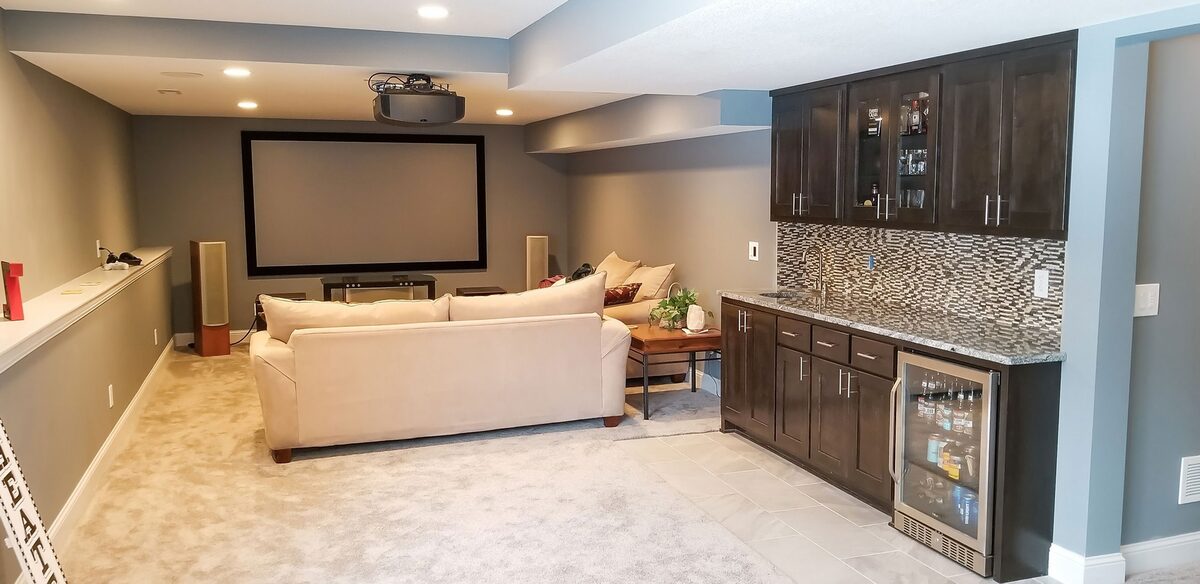
Use the gallery to identify what you want in your own lower level, then include the plumbing, electrical, ventilation and finish work in the scope. View the basement gallery. These photos are not a priced case study.
Basement finishing is attractive because it feels like hidden value, square footage already inside the house that just hasn't been put to work yet. That instinct is often right. It can be one of the most efficient ways to add everyday living space. The catch is that Minneapolis basements aren't blank slates. Moisture conditions, mechanical runs, ceiling height, egress, and bathroom rough-ins all shape the cost before finishes even enter the conversation.
What a basement finish usually costs
A simpler basement finish can provide a family room and full bathroom with straightforward flooring, lighting and finishes. Adding a wet bar, separate guest or office space, extensive built-ins or specialty rooms broadens the scope. The budget depends on how much space is being finished, what the existing basement needs and the materials you choose.
Bathrooms are one of the bigger tipping points. Adding plumbing below grade, improving ventilation, and building a bathroom that feels worth having changes the number quickly. The same is true for wet bars, custom millwork, and specialized lighting or AV treatment. These aren't reasons to avoid them. They're reasons to plan them honestly.
Moisture is the first budget conversation
Before layout, before flooring, before paint, the first question should be whether the basement is truly ready to be finished. Efflorescence, staining, musty odor, or intermittent seepage aren't cosmetic concerns. They're warnings that the room may not be ready for framing and insulation. Finishing over moisture is one of the quickest ways to turn a promising project into a hidden problem.
That's why good basement planning sometimes spends money before visible transformation starts. Drainage correction, sump improvements, targeted waterproofing, or a better wall assembly can feel unglamorous, but they protect the work that follows. Basements reward discipline more than optimism.
What drives basement cost most
Bathroom scope, egress needs, and ceiling compromises are usually the biggest drivers. If the plan includes a legal sleeping room, proper egress becomes part of the conversation. If mechanicals are crowded, layout options narrow and finish labor can rise. If the space needs to feel integrated with the rest of the home instead of just finished enough, material and lighting decisions begin to matter more.
There is also a big difference between a basement that needs to work for one clear use and a basement expected to do everything at once. Families often want media space, guest space, a home office, exercise space, storage, and a bathroom in one lower level. That can be done well, but the budget should reflect the ambition.
Common basement cost questions
What does basement finishing cost in Minneapolis?
A simpler basement finish often runs $80,000 to $140,000 and can usually include a full bathroom, depending on existing conditions, plumbing and finish choices. A more extensive lower level with a wet bar, full bath and additional living space is roughly $160,000 to $240,000. Larger or more specialized scopes with sport courts, custom millwork, or major moisture and mechanical corrections can reach $240,000 to $500,000 or more. These are approximate scope examples; the work for your basement needs its own estimate.
What should be checked before pricing finishes?
Moisture, drainage, ceiling height, mechanical runs, egress, and bathroom rough-ins should be understood before finish selections. Those conditions shape the real budget more than paint or flooring.
Is adding a basement bathroom expensive?
It can be one of the bigger budget shifts because below-grade plumbing, ventilation, waterproofing, and finish quality all meet in a small area. It is often worth doing, but it should be planned honestly.
Official planning references
These links cover permitting, building requirements or contractor licensing. They are not sources for the construction prices in this guide.
Basement planning should treat moisture, egress, mechanicals, and inspections as real scope, not afterthoughts. These references help anchor the code and licensing side before final design.
Next step
Use the first basement conversation to solve the right problem first.
We can help sort what the lower level should become, what conditions need to be addressed first, and which scope decisions are most likely to move the budget.