Scope
Ground-up custom home: architectural coordination, finish spec, full build.
A Twin Cities custom home built on the unglamorous fundamentals: good proportion, warm materials, a plan that serves a family, and the restraint to not over-design any of it.
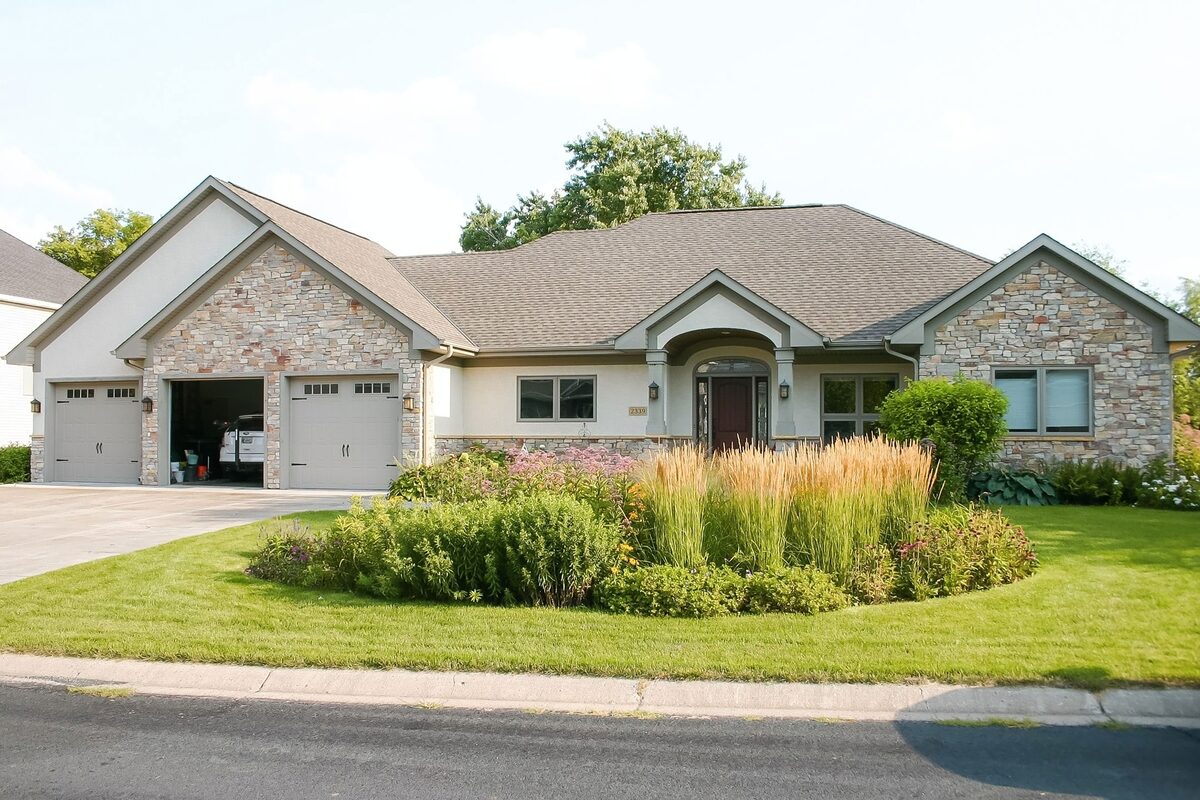
Ground-up custom home: architectural coordination, finish spec, full build.
Families who want a house that feels complete and livable, not over-styled.
That a custom home can read as calm and established from day one.
The brief here wasn’t a statement house. It was a forever-ish house: a plan that handles a family today and still works when the kids are back with their own kids. That shapes everything from the scale of the kitchen to how the lower level lives. A custom home only earns its budget when the plan answers daily life better than the houses on the resale market could.
The exterior did the same quiet work. Stone, stucco, shake, shingle, and a roofline that holds together. Nothing trying too hard, and nothing that’ll read as dated in ten years. The proportions matter more than the materials here: roof pitch, overhang depth, window rhythm, and the relationship of the garage mass to the entry. Get those right and the finish choices can be quieter without losing presence.
Mechanical, structural, and envelope work all got the same kind of attention. A house built to age well isn’t about the marketing on the front page of the spec sheet; it’s about insulation continuity, drainage planes, properly sized HVAC, and exterior detailing that handles Minnesota weather without complaint for thirty years.
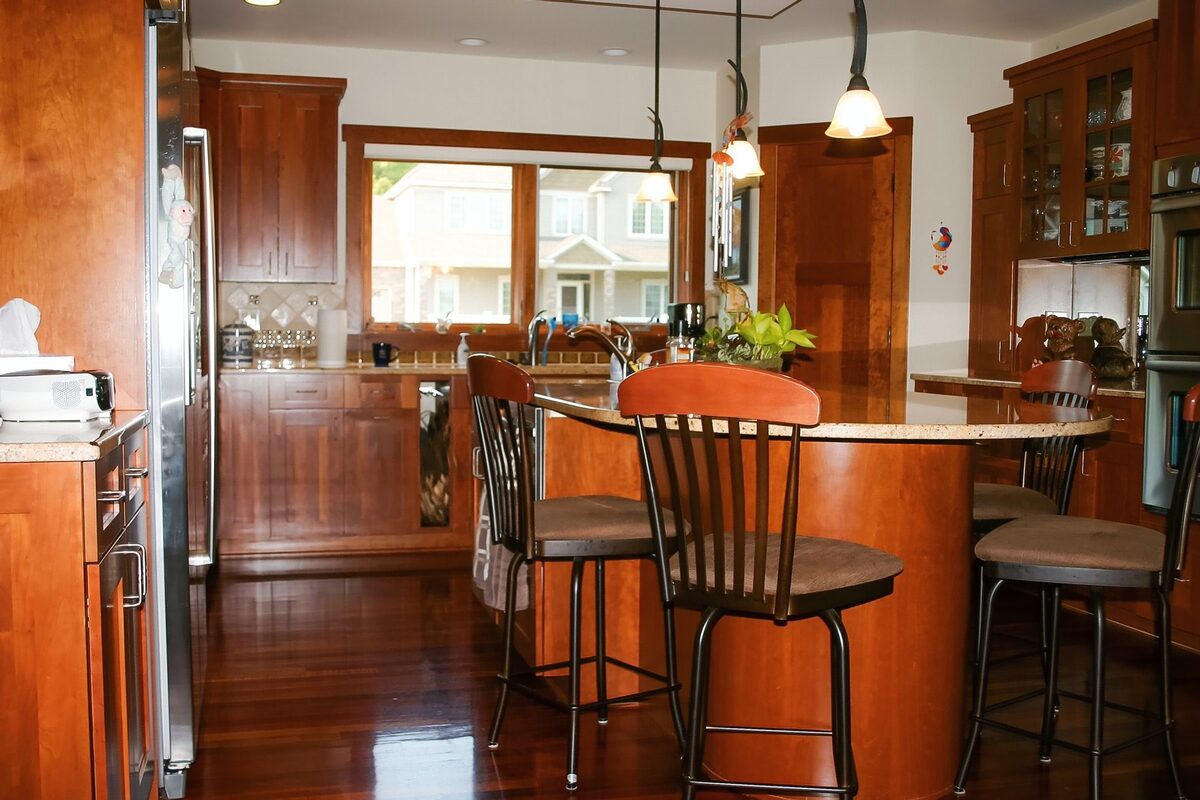
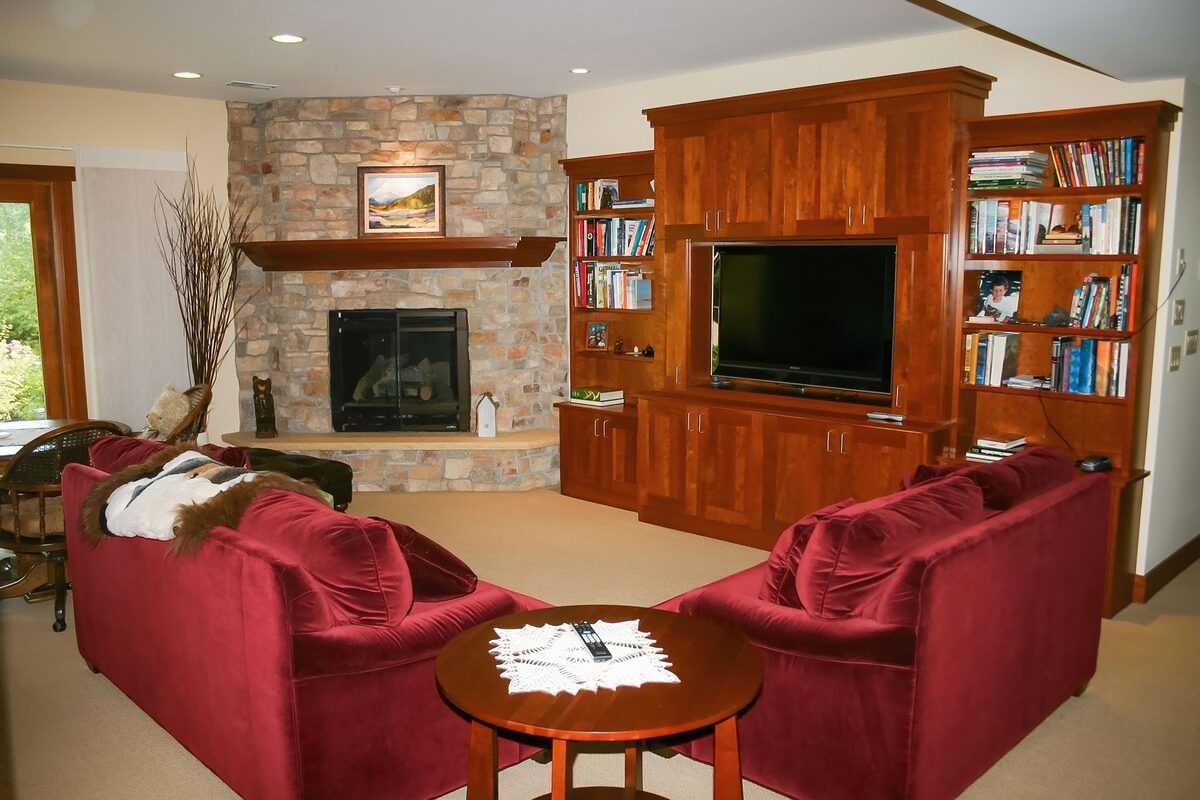
Custom homes go wrong when every room wants to be the hero. We kept the vocabulary tight so the house would feel like one idea, not a tour of a dozen. Cherry cabinetry on the main floor and the lower level. Stone at the fireplace echoing stone on the exterior. Granite, quartz, and marble used surgically rather than everywhere. Cabinet profiles consistent across rooms. Lighting families that agree.
The restraint is also what makes the project age well. A house that leans into one strong material story holds up; a house that chases six trend categories starts looking dated the season after move-in.
Inside the house
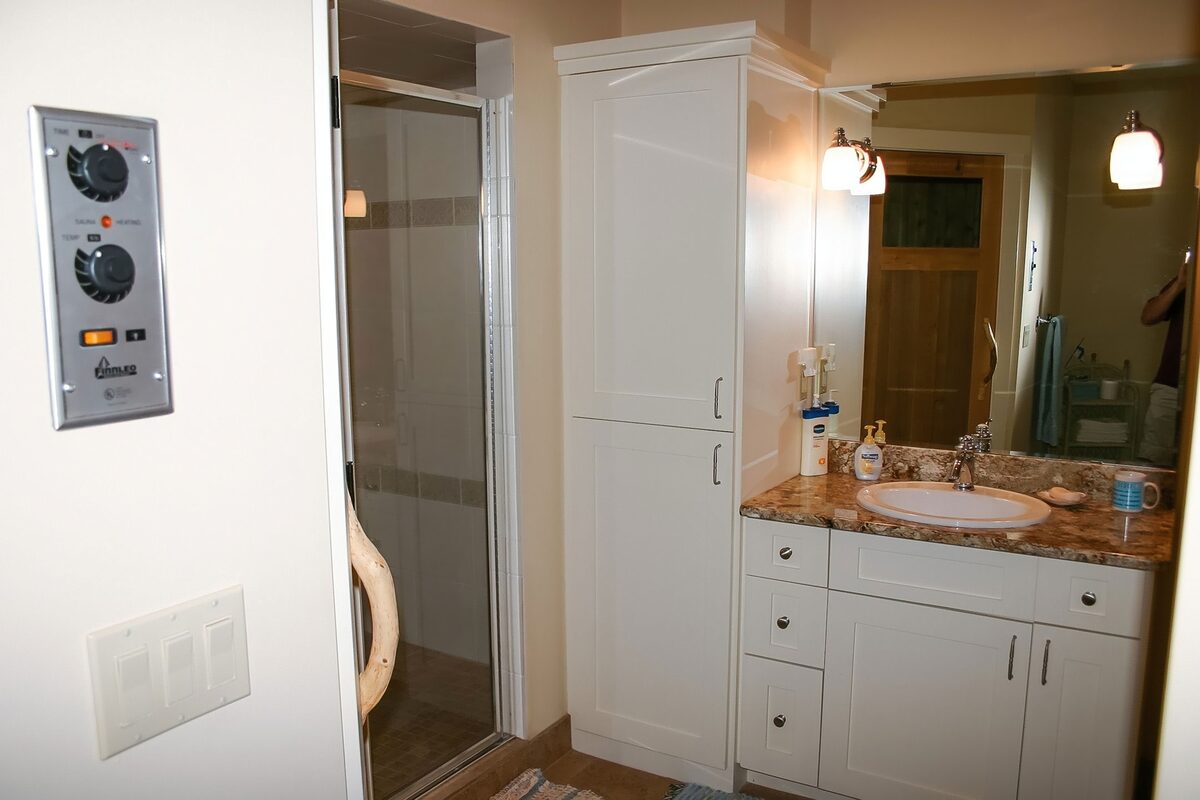
Kitchen, great room downstairs, and a bath that shares the same material story.
The strongest custom homes come from a plan that protects the tone early and doesn't let late preferences pull it apart. That's most of the work on a project like this.
If you want a house that's meant to last, not to photograph, this is close to what we do.
Project notes
Scope: a full custom home from foundations up. Architectural coordination, structural engineering, site work, framing, mechanical systems, exterior detailing, interior millwork, finishes, and landscaping that was planned to grow into the rest of the design rather than fight it. The brief was forever-ish, not statement: a home with enough material discipline to age into the neighborhood rather than stick out from it.
A handful of decisions shaped the final character. The roofline kept its pitches and overhangs honest to the language of the surrounding neighborhood. The exterior leaned on stone, stucco, shake, and shingle, used in proportions consistent with the era the house is quietly evoking. The kitchen was sized for actual cooking and gathering rather than display, with a raised island that gives seating and a real working counter that doesn’t get overtaken by serving pieces. The lower level was treated as a real living floor: floor-to-ceiling stone fireplace, cherry built-ins matching the upstairs, a walkout that brings light in, and a bath with steam shower and dry sauna built in so the floor functions as a quiet retreat.
Material restraint runs all the way through. Cherry millwork above and below grade. Three finish metals, not seven. Granite, quartz, and marble each used in one spot rather than competing across rooms. White Shaker cabinetry in the lower bath echoes the upstairs in proportion but stays its own thing. The discipline isn’t about cost cutting. It’s about making the house feel held together.
Custom-home questions we hear often
A custom home of this scope in the Twin Cities typically lands $800,000 to $1.5M depending on square footage, lot conditions, finish standard, and how much site work the property needs. Lake-corridor and lot-constrained builds can run higher.
Planning, design, permitting, and selections usually run six to twelve months. Construction is typically twelve to eighteen months from groundbreaking. The schedule lengthens with custom millwork, longer lead-time fixtures, or complex site conditions.
Both. On many custom homes we coordinate with the homeowner’s architect from schematic forward. On others we lead design in-house with structural and HVAC partners. The right answer depends on the lot, the program, and the homeowner’s preference for a single point of accountability.
Custom homes go wrong when every room wants to be the hero. A house feels settled when the vocabulary is held from the exterior through the millwork, the lighting, and the trim. A dozen disconnected ideas read as a tour rather than a home.
Custom-home planning
We can pressure-test scope, layout, material direction, and how the home should live before the project starts collecting expensive late corrections.