Custom homes

Twin Cities custom homes designed to still feel like home in twenty years.

We've been building custom homes across Minneapolis and the west metro since 1974. The houses we're proudest of are the ones that still feel right long after the owners moved in.

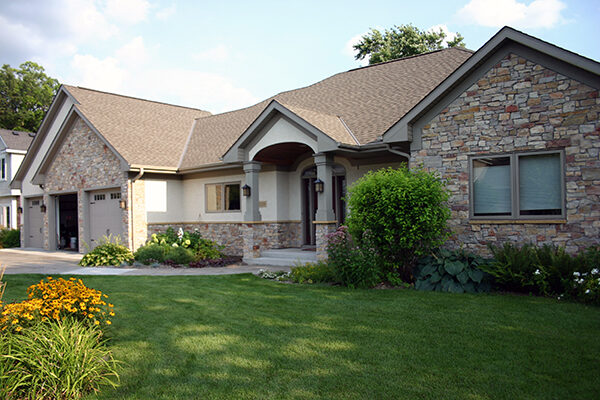
Finished craftsman-style Twin Cities custom home with stone accent and mature landscaping
Custom homes earn their value over time. Material restraint, proportion, and durability decide whether the house ages well or starts looking dated by year five.
What we work on
  • New custom homes on private and lake-area lots
  • Tear-down and replacement on close-in west-metro lots
  • Architect-led and design-build relationships
  • Lake-corridor builds with site-aware planning
  • Multi-generational and aging-in-place homes built for the long view
What separates a long-view custom home

The custom homes that still feel right in twenty years are the ones built with material restraint, real architectural proportion, durable systems, and finish decisions made for the family that lives there — not the photographer who shows up the week after closeout. We design for the house's second decade, not its first photo.

Why custom homes go wrong

The houses that disappoint usually got designed for the move-in week.

The hardest part of a custom home isn't the build. It's keeping the design grounded enough that the finished house still works in fifteen years. Most regrets come from decisions made for short-term reasons that age badly.

Trend chasing

The trends that look right today usually don't.

Material trends move faster than houses do. Custom homes that age well lean on architectural proportion, durable materials, and quieter finishes — not the colors that look right the year of move-in.

Over-customization

Hyper-specific spaces become hard-to-resell rooms.

The cigar room, the dance studio, the wine cellar that nobody uses. Custom doesn't have to mean idiosyncratic. We help clients tell the difference between custom that adds value and custom that limits it.

Builder absent

If the builder is not in the room during design, expect rework.

Cost surprises usually trace back to architectural decisions made without builder input. We want to be at the table during design so the drawings are buildable, the budget is honest, and the schedule is real.

Scope and budget orientation

What a Twin Cities custom home actually requires.

Every custom home is its own conversation. The ranges below are construction-side and exclude land, design fees, and major site work. Real numbers depend on size, finish tier, site conditions, and how complex the structural and mechanical systems get.

Mid custom

Strong house on a buildable lot.

3,500 to 5,500 finished square feet, semi-custom to custom cabinetry, premium-but-not-extreme finishes, standard mechanical systems. Often $1.4M to $2.5M depending on lot conditions.

Premium custom

Larger footprint, deeper finish, complex site.

5,500 to 8,500 finished square feet, fully custom cabinetry, premium stone and millwork, integrated systems, lake-area or sloped sites. Often $2.5M to $5M.

High-end custom

Architect-led, lake-corridor, deep integration.

8,500+ square feet, top-tier architecture and engineering, deep custom millwork, integrated smart-home systems, complex site work or lake-side conditions. Often $5M and up.

Where we add the most value

Builder involvement should start before drawings get expensive.

The cleanest custom homes we build are the ones where we were involved before the architect started final drawings. The earlier the builder is at the table, the fewer surprises the family has to absorb later.

Pre-design

Site, lot, and program review.

We walk lots, evaluate constraints, talk through what's actually buildable, and pressure-test the program against the budget category. The first conversation is usually about scope feasibility, not architecture.

During design

Constructability, sequencing, and cost honesty.

We sit with the architect on selections, structural strategy, and finish-tier decisions while the drawings are still flexible. That's when builder input is most valuable and least disruptive.

Construction and beyond

Daily on-site management and post-closeout follow-through.

Most custom builds have either Andy or his son on site through the project. After closeout, we stay reachable for the warranty period and beyond — we'll see most of these owners again.

Custom home FAQ

Questions families usually have before commissioning a build.

The questions worth asking early are the ones about timeline, cost honesty, and how the builder will actually be involved — not the ones about finishes.

How long does a Kuechle custom home take from design to keys?

Most projects run 14 to 24 months from the start of design through final closeout. Design and engineering typically take 6 to 9 months, permitting and pre-construction another 1 to 2 months, and construction 12 to 16 months depending on complexity, site conditions, and weather windows.

Do you work with our architect or do you do design-build?

Both. We've worked with architects the family selected, and we run design-build relationships with architects we've worked alongside for years. The most important factor is that the builder is at the table during architectural decisions, not just handed final drawings to price.

Where do you build custom homes?

Across Minneapolis and the west metro. Most projects land in Plymouth, Wayzata, Edina, Minnetonka, Eden Prairie, Lake Minnetonka, Maple Grove, Golden Valley, St. Louis Park, and the broader west-metro lake corridor.

What does a custom home actually cost in the Twin Cities?

Real custom homes from us typically start around $1.4M and run upward depending on size, finish tier, site work, and structural complexity. Larger lake-area or premium custom builds often run $2M to $5M or more. We can pressure-test scope against budget early so the design conversation has rails.

What separates Kuechle from other Twin Cities custom builders?

Fifty years in business under the same family. Most projects have either Andy Kuechle or his son on site regularly. We're known for restraint and follow-through more than for the loudest finishes. The houses we're proudest of are the ones that still feel right twenty years in.

Next step

The earliest custom-home conversation is the cheapest.

Talk with us before drawings start hardening. We'll pressure-test the lot, the program, and the budget category so the design phase has real rails — not assumptions that get expensive to undo later.

CallTell Us About Your Project