Kitchen remodeling

Kitchen remodeling built around how your family really uses the room.

We design kitchens around flow, storage, sight lines, appliances, and finish quality together. The room should work harder every day — that's what makes it feel right years later.

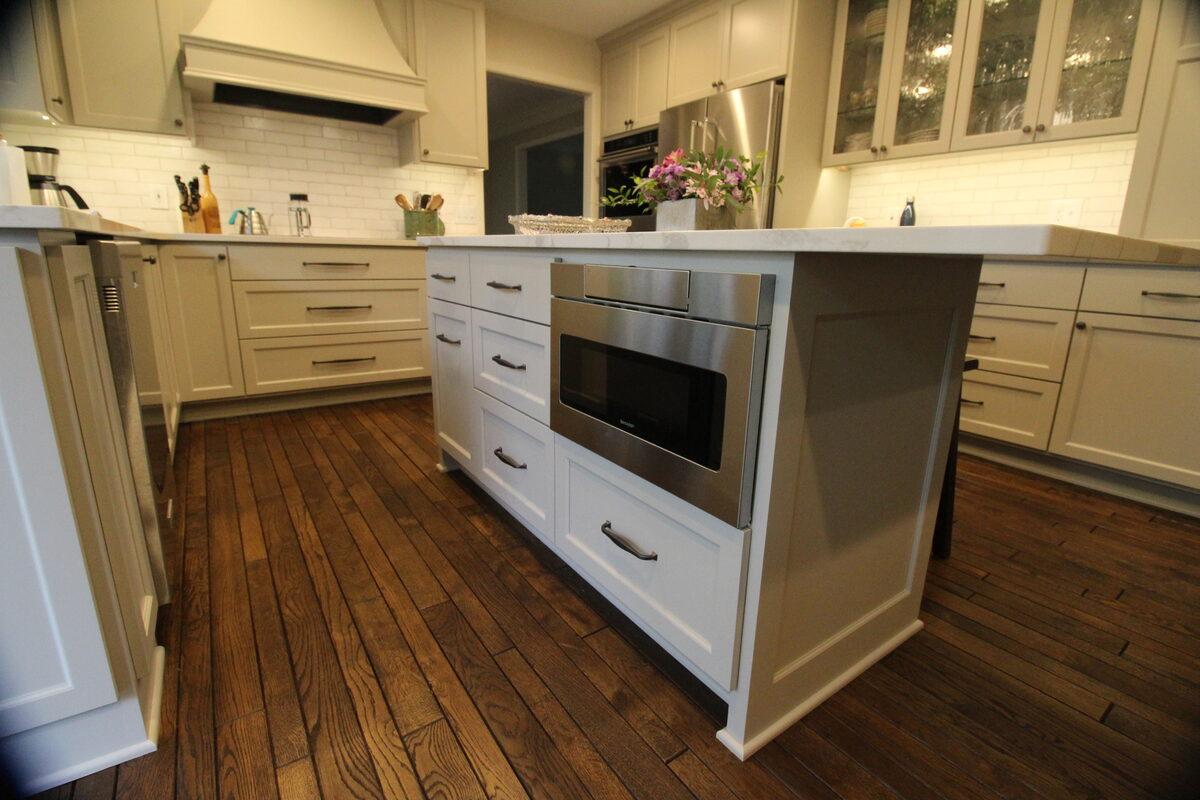
White-shaker kitchen with painted island, subway-tile backsplash, and stainless appliances
Most kitchen problems are layout problems wearing finish costumes. The structural conversation should happen before the cabinet conversation.
What we work on
  • Full kitchen remodels with cabinetry, stone, and finish carpentry
  • Layout-driven openings between kitchen, dining, and family rooms
  • Walk-in pantries, beverage centers, and butler's pantries
  • Custom and semi-custom cabinetry, painted or stained
  • Stone selection, slab booking, and waterfall island work
What separates a working kitchen from a pretty one

The kitchens we're proudest of are the ones where the layout decision came first and the finish decisions followed. Cabinet line, stone, lighting, and appliance package all matter, but the layout is what decides whether the family actually uses the kitchen the way the photos suggest. Layout-first thinking is the single biggest difference between a kitchen that works and a kitchen that just looks new.

Why kitchens disappoint

The kitchens that fall short are usually finish-only fixes to layout-shaped problems.

A common pattern: the family hates the kitchen, the contractor proposes new cabinets, and three months later the kitchen is newer but feels exactly the same. The patterns below are the ones we test for in the first conversation.

Layout

If the wall is wrong, the cabinets won't save it.

A kitchen-to-family wall in the wrong place is the most common Twin Cities kitchen problem. Removing it usually takes structural work, but it's almost always the change that makes the family actually use the kitchen. We figure that out before cabinet design, not after.

Storage

Cabinet count is not the same as usable storage.

Most kitchens have plenty of cabinets and not enough useful ones. Pull-outs, drawer banks, real pantry space, and rational utensil and dish placement are what reduce daily friction. We design that into the cabinetry order, not bolt it on at install.

Sight lines

The kitchen needs to talk to the rest of the house.

Whether the kitchen is open to family or living, the sight lines decide how the room actually feels. Range placement, island orientation, and visual path to the back door all shape the experience more than the backsplash does.

Scope and budget orientation

What a Twin Cities kitchen remodel actually costs.

The right number depends on cabinet tier, layout changes, structural work, stone selection, and appliance package. The ranges below are construction-side and exclude furniture and decor.

Refresh tier

Cabinets, counters, and finishes in the existing footprint.

New cabinetry, stone, backsplash, lighting, and appliances with the existing layout largely intact. Often $60,000 to $100,000 depending on cabinet tier and finish level.

Full remodel tier

Layout changes, real island, better cabinetry.

Layout reconfiguration, structural openings, new cabinetry tier, full stone package, and updated lighting and electrical. Often $100,000 to $175,000.

High-end tier

Custom cabinetry, structural work, premium appliances.

Inset custom cabinetry, integrated appliances, stone-clad islands, deep millwork, and significant structural work. Often $175,000 to $400,000 or more.

When the work makes most sense

The right time to remodel the kitchen depends on what else the house needs.

A kitchen rarely lives in isolation. The right scope often depends on whether the rest of the house is also due for change — and whether the project should grow into a broader scope or stay focused.

Standalone

The kitchen is the bottleneck and nothing else needs to move.

If the rest of the house works and the kitchen is the daily friction, a standalone kitchen remodel is usually the right call. Tight scope, predictable schedule, real value.

Kitchen-plus-flow

Kitchen plus the connected rooms it should open into.

Many of our best kitchens are projects where the kitchen and the adjacent family or dining room got planned together. Opening the wall is half the project; what's on the other side is the other half.

Inside a whole-home

Kitchen as part of a whole-home renovation.

If the house needs broader work anyway, putting the kitchen inside a whole-home plan often produces the best result. The kitchen ends up integrated, not lifted out and dropped back in.

Kitchen remodeling FAQ

Questions homeowners usually have before the demo.

Most early kitchen questions are about layout, cabinet line, and how the schedule actually works. The cost guide covers the budget side in more depth.

What does a kitchen remodel cost in the Twin Cities?

A lighter refresh often runs $60,000 to $100,000. A strong full remodel with cabinetry, stone, and finishes typically lands $100,000 to $175,000. High-end kitchens with layout changes, custom cabinetry, premium appliances, and structural work can reach $175,000 to $400,000 or more.

Do you do layout-only redesigns or only full remodels?

We do both, but most of our work is full layout-driven remodels. The kitchens we do best are the ones where the family is willing to look at structural changes, not just selection swaps. The cabinetry tier and the layout decision usually have to be made together.

How long does a kitchen remodel take?

A typical full kitchen remodel runs 12 to 20 weeks of construction once permits and selections are locked. Custom cabinetry lead time, stone fabrication, and any structural work move the schedule the most.

What cabinetry lines do you work with?

We work with a small group of semi-custom and custom cabinetry shops we've used for years. The right cabinet line depends on the house, the budget, and how heavy the daily use is. We help homeowners pick a tier that fits both.

Do I need to move out during a kitchen remodel?

Most families stay. We set up a temporary kitchen, dust-control the construction zone, and sequence the work to keep the rest of the home livable. Some larger projects with major structural work make a temporary move easier, but it's almost never required.

Next step

The right kitchen project starts with a layout conversation, not a cabinet showroom.

We can help test scope, structural feasibility, and cabinet tier together so the design conversation is grounded before selections start. The cost guide breaks down what most Twin Cities homeowners want to know first.

CallTell Us About Your Project