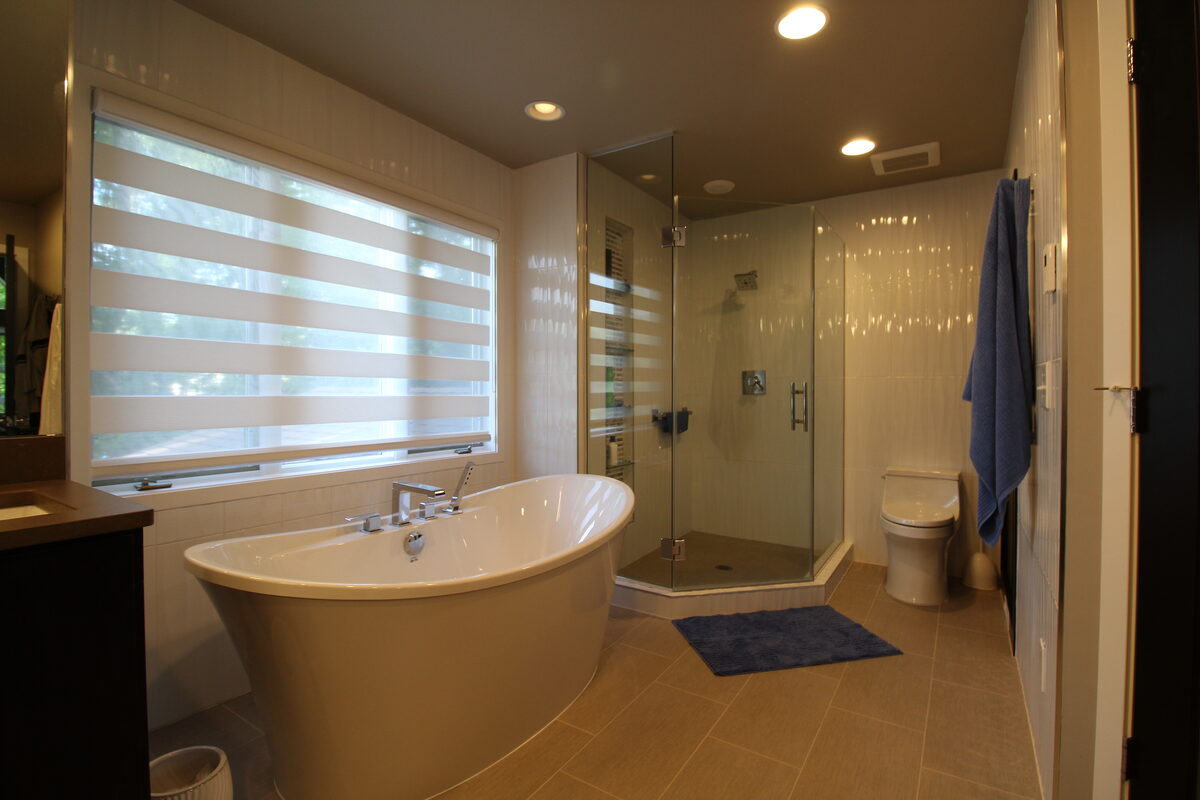
A bathroom remodel is one of the clearest examples of why square footage can be misleading. A hall bath may be compact, but it still has plumbing, electrical, tile work, waterproofing, finish carpentry, fixtures, and inspection requirements. The room is small. The craft load isn't. That's why bathroom pricing in Minneapolis ranges so widely, and why internet averages are usually too vague to plan around.
Bathroom remodel planning ranges
The room is small, but the work is dense. These ranges are meant to put the project in the right category before selections start creating false precision.
| Project type | Typical planning range | What it usually includes |
|---|---|---|
| Hall bathroom | $25,000-$80,000 | Layout mostly stays, new tile or surround, vanity, fixtures, lighting, ventilation, and corrected waterproofing details. |
| Primary bathroom | $50,000-$140,000 | Custom shower, better vanity, stone or quartz, glass, lighting, plumbing updates, heated floor or upgraded ventilation. |
| Higher-tier primary suite | $140,000-$300,000+ | Expanded layout, higher-tier tile, custom storage, full shower system, glass, lighting scenes, specialty fixtures, and higher finish continuity. |
What a bathroom remodel typically costs
For a standard hall bath in Minneapolis, a realistic planning range is often about $25,000 to $80,000 depending on whether the layout stays put and how far the finish level goes. A primary bathroom with a custom tile shower, upgraded vanity, stone or quartz surfaces, and more involved plumbing and electrical work usually lands closer to $50,000 to $140,000. Highly customized primary suites can go well beyond that.
The more useful question isn't what a bathroom costs in the abstract. It's what this bathroom is trying to become. A straightforward hall bath refresh, a durable family bath rework, and a higher-tier primary suite are three different projects even if they all happen in the same square footage category.
The cost drivers that matter most
Tile and waterproofing are two of the biggest cost and quality drivers in the room. A prefabricated surround and modest floor tile budget very differently than a fully tiled shower with niches, custom layout, and a better membrane system underneath. Vanity quality also moves quickly. Builder-grade stock cabinets and simple tops sit in one band, while furniture-grade vanities, better hardware, and cleaner countertop detailing sit in another.
Plumbing moves matter too. Keeping the toilet, shower, and vanity where they are is usually less expensive than relocating drains and supply lines. The same is true of electrical. Better lighting, heated floor systems, added outlets, and upgraded ventilation improve the finished bathroom, but they change the cost conversation as well.
Where Minneapolis homeowners get surprised
The biggest surprise is usually not the vanity or the faucet. It's what's discovered once the room is open. Older homes may reveal outdated plumbing, wall damage from long-term moisture, or framing conditions that need to be corrected before the finish work can go back in. Bathrooms are one of the least forgiving places in the house to guess your way through those issues because moisture punishes shortcuts later.
That's also why waterproofing deserves its own line of attention. Good-looking tile isn't the same thing as a dependable shower assembly. If a contractor is vague about how the wet area is being waterproofed before tile goes in, that isn't a detail problem. It's a risk problem.
Permits and schedule still count here
Bathroom work often pulls in plumbing, electrical, ventilation, and in some cases structural updates. That means permit and inspection coordination can be part of the project, especially when systems are moving or a shower or tub area is being rebuilt from the studs. Homeowners are usually better served by planning that in from the beginning instead of treating it as a nuisance that might be skipped.
Selections also shape the schedule. Tile, plumbing trim, vanity lead time, shower glass, and any specialty finish items should be chosen before the room is torn apart. Bathroom projects feel faster and calmer when the hard decisions are made before demo instead of after the room is unusable.
How to use the number wisely
A good planning number shouldn't only tell you whether the project is possible. It should tell you what kind of project you can responsibly pursue. If you're targeting a primary bath feel on a hall bath budget, the problem isn't the estimate. The problem is fit between the vision and the investment. Better early clarity saves frustration later.
For Minneapolis and West Metro homeowners, the most useful next step is usually a real scope conversation: what stays, what moves, what finish level is expected, and where the budget should be protected first. That conversation is far more valuable than another generic average pulled from a national article.
Common bathroom cost questions
What does a bathroom remodel cost in Minneapolis?
A hall bath often needs $25,000 to $80,000. A primary bath often needs $50,000 to $140,000. A highly customized primary suite can reach $140,000 to $300,000+.
Why are bathrooms expensive for their size?
Bathrooms are compact but technically dense. Plumbing, electrical, waterproofing, tile, fixtures, ventilation, inspections, and finish carpentry all happen in a room where mistakes are hard to hide.
What should not be value-engineered out?
Waterproofing, ventilation, drainage, electrical safety, and proper substrate prep should be protected first. Pretty tile over a weak wet-area assembly is not a good bathroom.
Official planning references
Bathroom budgets move with plumbing, electrical, ventilation, waterproofing, and inspection scope. These references help anchor the permit and licensing side before a project-specific review.
Next step
Use cost planning to narrow the bathroom you actually want to build.
If you already know the house and the priority, we can help pressure-test scope, finish level, and where the budget should be protected first.