Scope
Full bathroom remodel: layout, waterproofing, tile, fixtures, lighting, and cabinetry.
A freestanding tub under a banded shade, a full glass shower, warm porcelain tile, and a layout that holds together on rushed mornings and slow evenings.
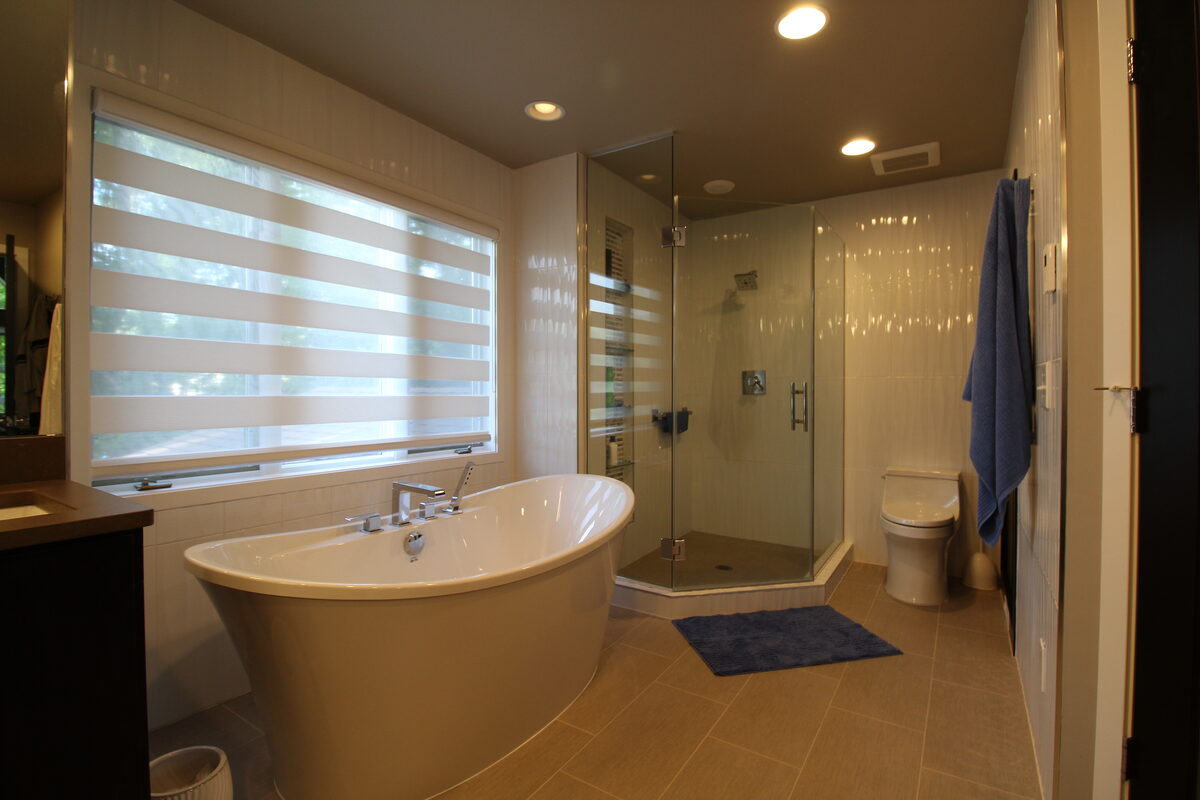
Full bathroom remodel: layout, waterproofing, tile, fixtures, lighting, and cabinetry.
Homeowners who care about how the bathroom feels every morning, not just how it shoots.
That a bathroom can be calm and spa-quiet without getting cold or overly precious.
The original bathroom had everything in the wrong place. The tub was too small for the room it was in. The shower was tight enough that the door clipped the vanity. The vanity itself had counter on either side of the sink but no useful workspace. The window faced an awkward angle and didn’t earn its location.
The remodel rebuilt the layout around daily use first and finish photo second. We pulled the tub off the wall, gave the shower its own bay, and ran the vanity along the long wall with real counter to either side. The horizontal window stayed, but the proportions of the room changed around it, so it suddenly read as deliberate rather than accidental.
Waterproofing got rebuilt from the subfloor up: full Schluter system, pre-slope at the shower pan, foam-board substrate at the wet walls, and tested before tile. Tile went in with the discipline a bathroom deserves: layout sketched in chalk first, full sheets at the focal walls, no cut tiles smaller than a quarter sheet at the eye line. Fixtures, lighting, and cabinetry got specified together at the same meeting so nothing competes with anything else.
Bathrooms punish shortcuts. The ones that still feel good in ten years are the ones where the hidden work was done right: the waterproofing membrane, the slope at the drain, the framing behind the niches, the silicone joints at every plane change. That’s most of what a good bath remodel actually is.
The visible finish is the smaller part of the budget and the smaller part of why the room ages well. The discipline is in the order: layout, structure, mechanical, waterproofing, substrate, tile, fixtures, lighting, finish. Each step has to be right before the next one starts.
Inside the room
Different bathrooms, same discipline on tile, waterproofing, and finish.
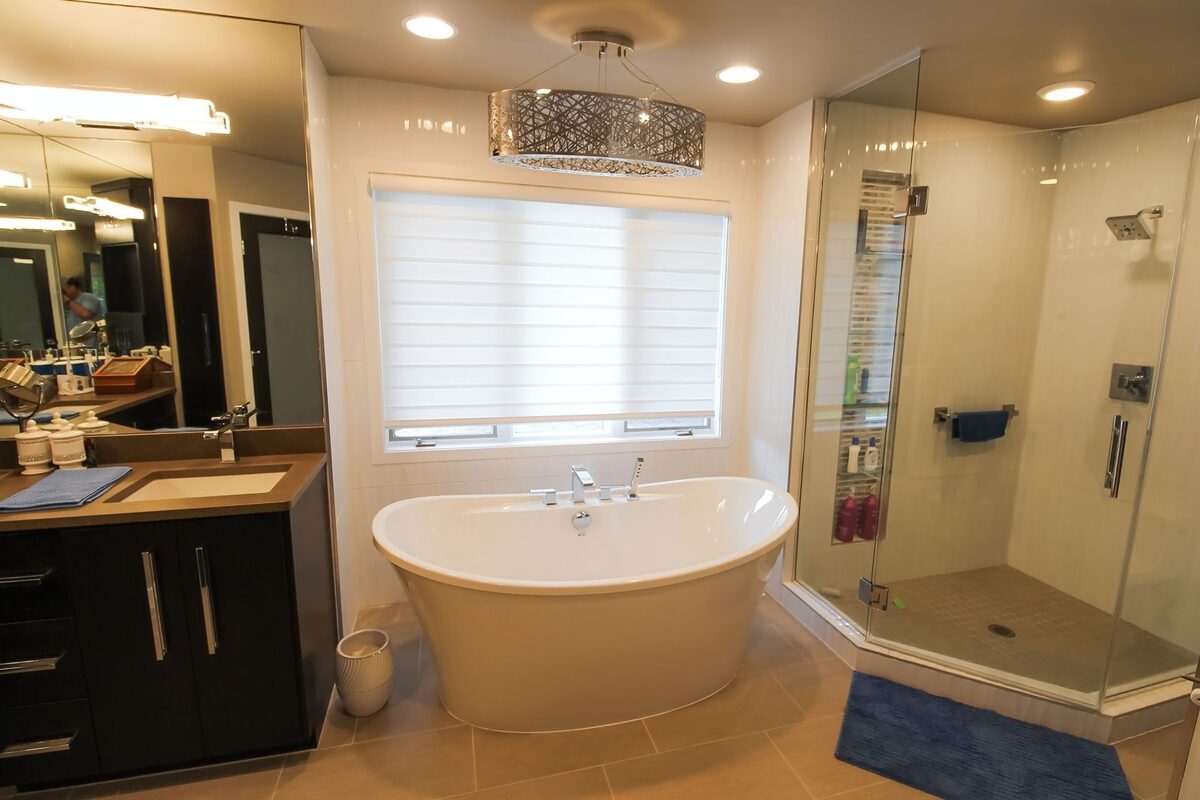
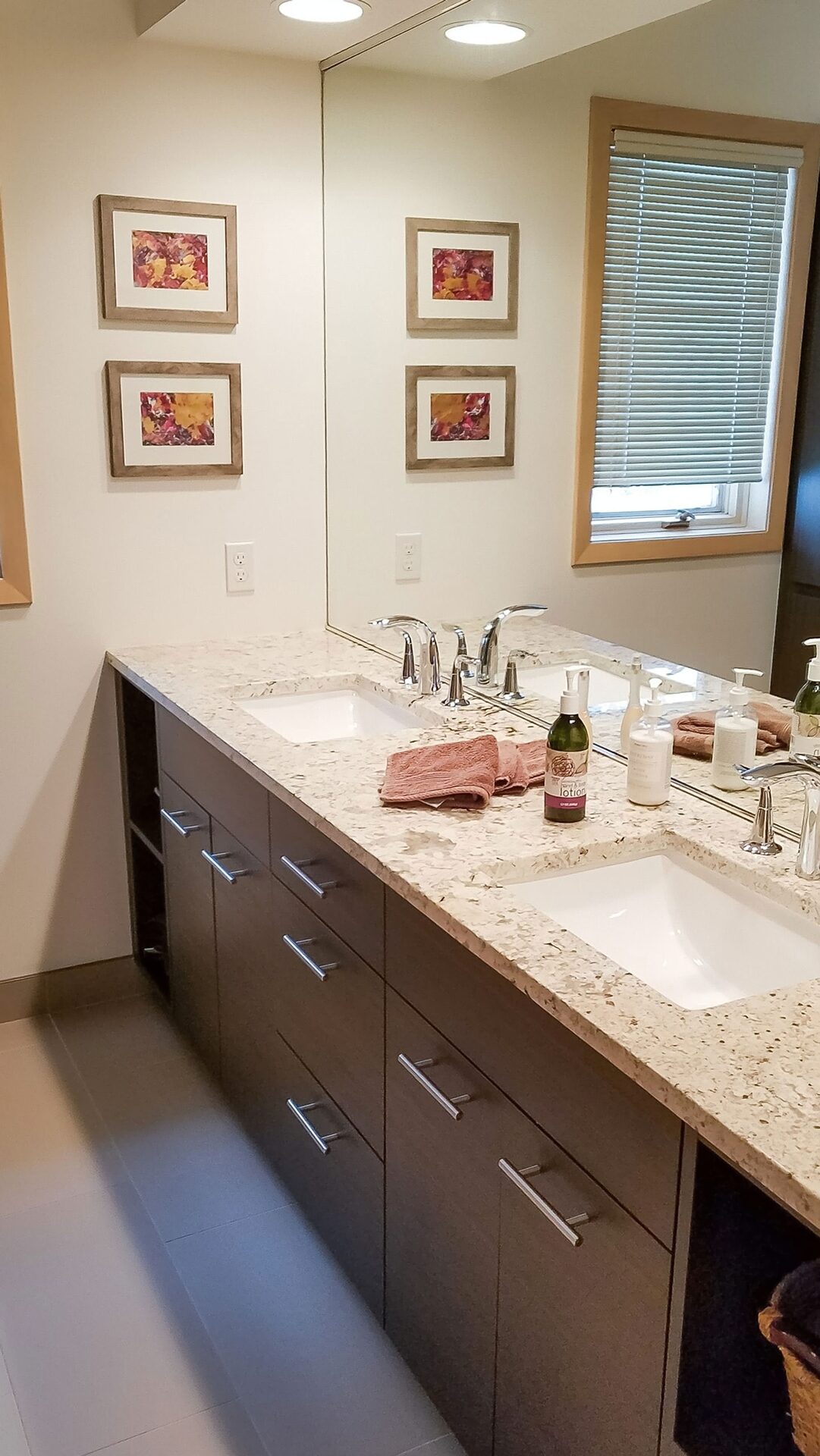
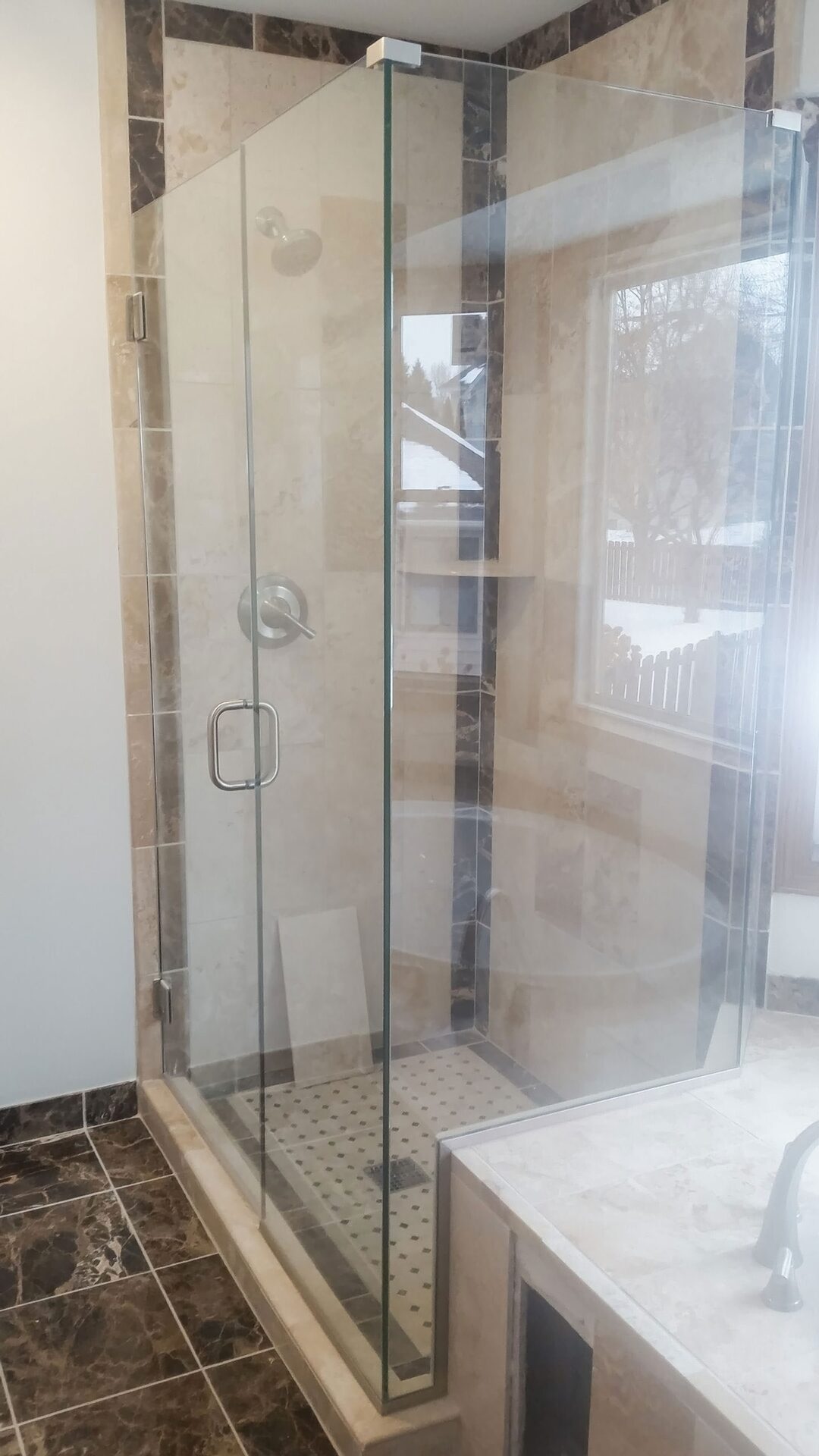
Layout first, waterproofing second, tile third. The fixtures and finishes arrive to a room that's already set up for them. That's the order we run bathrooms in.
If you want a bathroom that feels better every morning and still holds up ten years in, we do this work well.
See bathroom remodeling service or tell us about your project.
Project notes
The scope was a complete primary bath rebuild within the existing footprint. We didn’t move plumbing walls, but everything inside them changed. Demolition went down to subfloor and studs so the framing, plumbing, electrical, ventilation, and waterproofing could all be assessed and updated together. That’s usually the right order for an older bath: open it up, see what’s actually behind the tile, and plan from real conditions rather than a survey of the visible surfaces.
A handful of decisions shaped the result. The freestanding tub got its own bay along the window wall, so the glass shower didn’t have to share length with anything else. The vanity went to the long wall with two basins and real counter to either side, ending the morning competition for sink-side space. The window stayed where it was, but the proportions of the room changed around it: tile lines pulled the eye to the horizontal, the chandelier centered the tub, and the porcelain floor unified the whole room visually so the eye doesn’t bounce between zones.
Material-wise the room is restrained. Warm porcelain on the floor, neutral wall tile, marble in the shower, espresso vanity in a single Shaker profile, and a chandelier and sconces in matte black to anchor the whites and creams. No more than three finish metals in the room. Nothing competes. The plumbing fixtures, the lighting, the cabinet hardware, and the tile trim all came out of a single decisions meeting so they read as a set rather than a sequence.
Bathroom-project questions we hear often
A primary bath of this scope typically lands $50K to $125K depending on layout changes, tile complexity, glass, fixture tier, and whether plumbing or framing has to be reworked behind the walls.
Most primary bath remodels run six to ten weeks of active construction once selections are locked. Custom tile, heated floors, or older-home corrections can extend that. Selections and design usually take longer than the build itself.
Both. We design in-house for most projects, and we coordinate with the homeowner’s interior designer when they have one. The selections meeting where tile, fixtures, lighting, cabinetry, and counter agree on the same vocabulary is the same conversation either way.
Tile and grout are not a waterproofing system on their own. The substrate, waterproofing assembly, shower-pan details, and any required testing need to match the selected manufacturer’s instructions and the conditions in the room.
Bathroom planning
Tile, fixtures, lighting, waterproofing, layout, and comfort all have to be specified together. We can help you pull the selections into one coherent room.