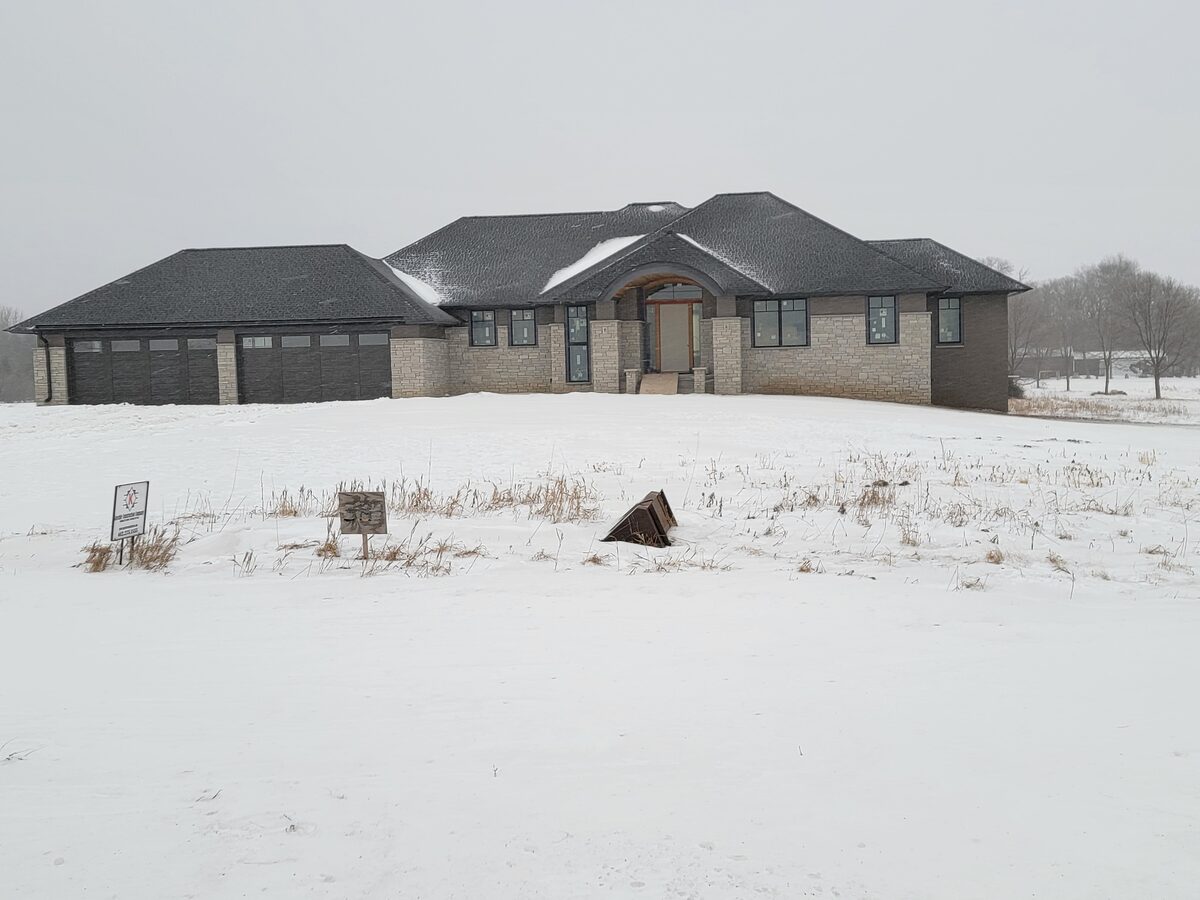
A second-story addition is one of the most cost-efficient ways to add real square footage when the lot won’t allow expansion outward. It’s also the most weather-dependent and most structurally sensitive of the addition options. The early budget conversation usually has more to do with the existing foundation, the existing roof, and the Minnesota calendar than with finishes. Here’s how it actually breaks down.
Three approaches and how they price
Partial second-story. Adding a story over part of the existing main floor, usually the bedroom wing or one half of the footprint. Lower cost than a full second story because less of the existing roof comes off and structural reinforcement is more contained. Good fit when the existing main floor already covers most of what the family needs.
Full second-story addition. Tearing off the existing roof and building a complete new second floor over the entire footprint. Adds the most usable square footage of any addition approach. Most expensive of the three because of weather exposure during the open-roof phase, foundation review, and the larger structural work.
Pop-top with existing roof reuse. Lifting and reusing parts of the existing roof system to reduce the time the house spends open to weather. Useful in some Minnesota seasons. Adds engineering and crane time, so the savings on roof material can get partially eaten by the labor and equipment to do the lift safely.
Typical Minnesota second-story addition ranges
These are planning ranges for the Twin Cities and broader Minnesota. They depend heavily on existing-house conditions, which is why the early budget conversation is mostly about what we discover when we open the walls and floor.
| Project type | Typical planning range | What it usually includes |
|---|---|---|
| Partial second-story | $300,000-$500,000 | Selective second-floor addition over part of the footprint, modest structural reinforcement, partial roof tear-off, 2-3 new bedrooms and one bath. |
| Full second-story addition | $500,000-$800,000 | Complete new second floor over existing footprint, full roof tear-off and rebuild, structural reinforcement of foundation and main-floor framing, primary suite plus 2-3 secondary bedrooms and 1-2 baths. |
| Higher-tier full second-story | $800,000-$1.2M+ | Complete second floor with custom millwork, higher-tier baths, integrated systems, structural reinforcement to allow open-plan main-floor reconfiguration as part of the project, and matched exterior finish. |
Foundation analysis comes first
The first question on a second-story addition isn’t “what does it cost?” It’s “can the existing foundation carry it?” A second story adds substantial dead and live load to the structure below it. If the foundation, main-floor framing, or load-bearing walls can’t handle the new loads, structural reinforcement is required before any of the visible work happens.
We typically have a structural engineer review the existing house early in design. The engineer’s report tells us whether the foundation needs underpinning or supplemental footings, whether main-floor walls need to be reframed or have new beams installed, and whether the existing posts and bearing points are adequate. The numbers vary, but reinforcement work often runs $30,000 to $100,000 on top of the base addition cost.
This is why the early budget conversation matters. A house that doesn’t need significant reinforcement might price at $550,000 for a full second story; the same square footage on a house that needs serious foundation work might be closer to $700,000 for the same finished result. Both are real numbers. The structural review is what tells us which house we’re working on.
Roof tear-off and the weather window
Once the existing roof comes off, the house is essentially open to weather until the new second-floor walls and roof are framed and dried in. In Minnesota, that window has to be planned around the calendar carefully. We aim for May through September weather windows for the open-roof phase whenever possible. October works some years; November almost never.
Tarping and temporary protection can carry the project through a couple of bad-weather days. They cannot carry it through a Minnesota cold front. Sequencing matters. So does having a contractor who has done this in this climate before and knows when to push and when to pause.
If the calendar pushes into late fall, partial second-story or pop-top approaches sometimes win because the open-roof window is shorter and more controllable. The best approach depends as much on when you start as on what you want to build.
Living through it (or not)
Most families don’t live in the house during the open-roof and dry-in phase. The two to four weeks when the roof is off and the walls are open is the loudest, dustiest, and most weather-sensitive part of the project. After dry-in, daily life can usually resume, with construction noise localized to the second floor.
Some families plan a full move-out for the entire project, which adds rent costs but reduces stress meaningfully. Others stay through the post-dry-in phase. We talk through both options early so the budget includes whichever choice the family makes.
Minnesota-specific code considerations
Frost depth. Minnesota frost-protection requirements are deeper than national averages because of the freeze cycle. Foundation reinforcement that involves new footings has to extend below frost depth, typically 42 inches or more in our area. Plan for it.
Wind load and snow load. Minnesota residential code requires designing for snow loads that southern states never see. New second-floor framing has to carry roof snow loads of 30 pounds per square foot or more. The structural engineer’s calculations reflect this; the lumber and beam sizing reflects it too.
Energy code. Minnesota residential energy code is among the stricter ones in the country. New second-story framing has to meet R-49 ceiling and R-21 wall insulation requirements, and continuous air sealing is increasingly part of the inspection process. Building it right the first time is significantly cheaper than retrofitting it later.
Egress. New bedrooms in the second-story addition need code-compliant egress windows. The window and well sizing, sill height, and clear opening requirements are spelled out in the residential code; we plan window selection and rough openings around it from the start.
When a second-story addition makes sense
When the lot is built out at grade and there’s no room to add out. Common in older Minneapolis neighborhoods and some inner-ring suburbs.
When the family needs significantly more square footage and the existing main-floor footprint is in roughly the right configuration. Adding above lets you keep what works and double the bedroom count.
When the existing roof system is at end of life anyway. If the roof has to be replaced in the next few years, building a second story now bundles the roof replacement into the addition rather than spending it twice.
When it doesn’t make sense: small homes where the addition would push total value above neighborhood norms; lots where adding out is genuinely possible and meaningfully cheaper; or homes where the foundation can’t carry the new loads without expensive reinforcement that doesn’t add livable space.
Common questions
What does a second-story addition cost in Minnesota?
A partial second-story addition typically runs $300,000 to $500,000. A full second-story addition runs $500,000 to $800,000. Higher-tier versions with structural reinforcement, custom millwork, and main-floor reconfiguration can reach $1.2M or more. Foundation conditions, roof tear-off scope, and the existing structure’s ability to carry new loads are the biggest variables.
Can my existing foundation carry a second story?
Sometimes, but it always has to be confirmed by a structural engineer. Newer homes with poured-concrete foundations and properly sized footings often can. Older homes with block foundations, undersized footings, or aging mortar frequently need reinforcement. Plan for $30,000 to $100,000 in structural reinforcement on top of the base addition cost if the engineer’s report calls for it.
How long does a second-story addition take?
Construction usually runs 7 to 12 months once permits and selections are locked. The roof tear-off and dry-in phase has to be planned around Minnesota weather, which often means starting design in late winter for a May or June start. Including planning and design, plan for a calendar year or longer start to finish.
Do we have to move out during a second-story addition?
Most families move out for the open-roof and dry-in phase, which is typically 2 to 4 weeks. After dry-in, daily life can usually resume on the main floor with construction noise localized above. Some families plan a full move-out for the entire project, which adds rent costs but reduces stress significantly.
Is it cheaper to add up or add out?
Adding out is usually cheaper per square foot when the lot allows it, because there’s no roof tear-off and the foundation work is contained to the new footprint. Adding up uses no extra yard but introduces structural reinforcement and weather sequencing. On a tight Minneapolis city lot or a fully built-out suburban lot, going up is often the only option.
Official planning references
Numbers depend on scope, but permit and licensing questions should still be grounded in real local rules. These are useful starting points before any project-specific review.
Second-story planning
A second story is a structural project first and a finishes project second.
The early conversation should be about whether the existing house can support the addition you’re imagining, and what the Minnesota weather calendar will allow. We can help work through both before drawings harden.