Smart home wiring & integration

Most smart-home regrets are framing-stage decisions, not gadget decisions.

A smart home should feel like a quieter, calmer house, not a project that has to be apologized for at the keypad. The decisions that make that possible get made during rough-in, when the walls are still open and conduit is cheap.

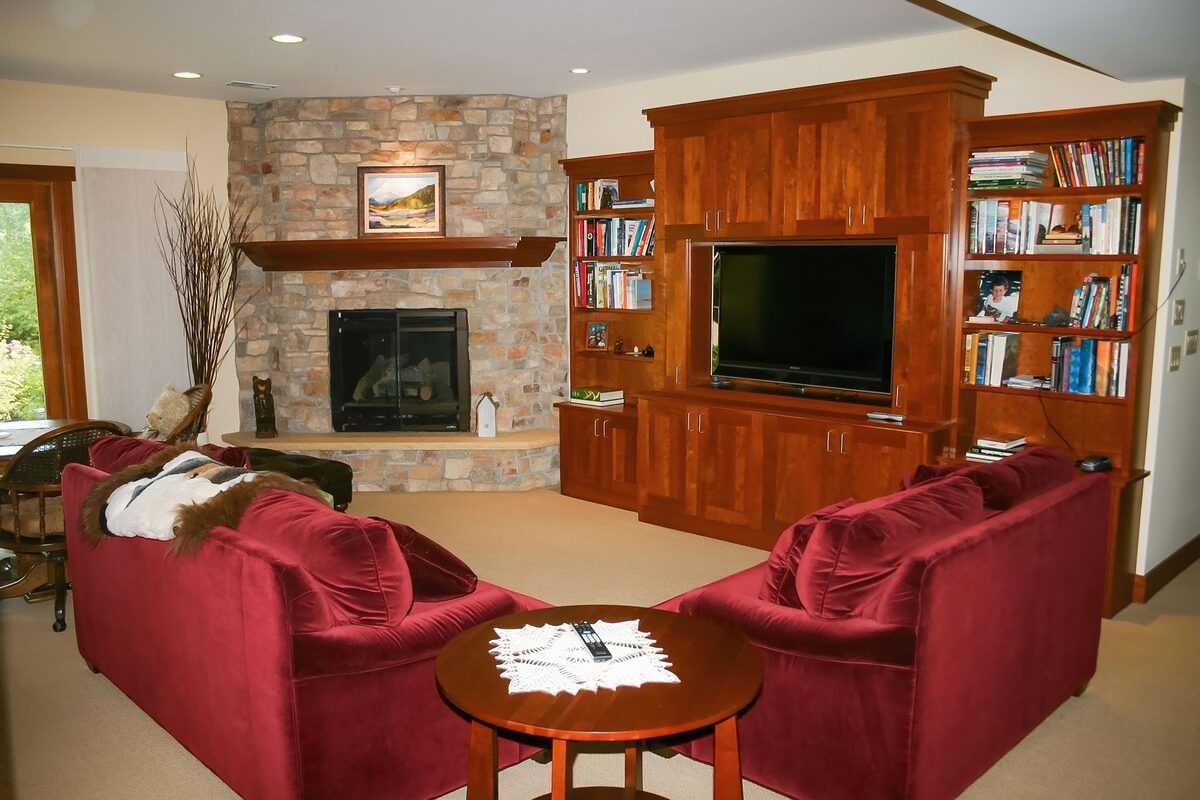
Great room with built-ins, recessed lighting, and integrated electronics
The cleanest smart-home installs are the ones you barely notice. That requires planning before electrical rough-in, not selections after drywall.
What we actually do
  • Structured wiring: Cat6/6A, fiber, coax, and conduit during framing
  • Lighting control rough-ins for Lutron, Control4, Savant, Crestron
  • In-ceiling and in-wall speaker pre-wires, theater room builds
  • Motorized shading prep, blocking, and power runs
  • Network closet sizing, ventilation, and dedicated circuits
  • Camera, doorbell, and access-control pre-wires
  • Smart-appliance circuits, EV chargers, induction loads
Where we draw the line

We are builders, not integrators. The wiring, framing, and electrical work is on us. The programming, head-end, and platform configuration belong with a dedicated integrator we work alongside through design and rough-in. That handoff is what keeps the result clean.

Why most smart homes underdeliver

The platform usually gets blamed for problems that started during framing.

A good integrator can only work with what the construction left them. If the wires are not in the right places, the conduit was not pulled, or the network closet is a 12-inch shelf in a mechanical room, even the best system feels patched together for the life of the house.

Wiring

Wireless solves a lot until the wall is finished.

The fastest way to a frustrating system is leaning on Wi-Fi for things that should have been hardwired. Theater audio, shades, in-wall keypads, ceiling cameras, and lighting controllers all want copper.

Network

The closet is a real room, not a leftover corner.

A serious system needs space for a rack, ventilation, dedicated power, and access from outside the rack for service. Sized late, that closet ends up undersized for ten years.

Coordination

The integrator should be in the room before drywall.

Most fixable smart-home regrets trace back to a system specced after framing was already underway. The earlier the integrator joins the planning, the less the homeowner pays to undo and redo.

Scope and budget orientation

What homeowners usually want to know first.

The infrastructure side of smart-home work spans a wide budget range. The numbers below are construction-side ranges only and exclude integrator hardware, programming, and ongoing service. Final scope drives where a project lands.

Foundation tier

Solid wiring spine, no system commitments.

Structured wiring throughout, basic lighting control prep, a real network closet, and pre-wires for the rooms most likely to grow. Often $20,000 to $45,000 on the construction side of a remodel or new build.

Whole-home tier

Lighting, audio, shades, and theater all planned in.

Full lighting-control rough-ins, distributed audio, motorized shading, dedicated theater room, and camera infrastructure. Construction-side typically $45,000 to $120,000 depending on house size and selections.

High-performance tier

Concealed integration across every room.

Hidden speakers, full-house lighting scenes, integrated shading, climate, security, theater, and outdoor systems. Construction-side $120,000 and up, paired with a long-relationship integrator.

Where the work fits

Smart-home prep belongs to a few specific moments.

The right time to plan smart-home infrastructure is the same time the rest of the house gets planned. Trying to retrofit later usually means opening walls, patching ceilings, and accepting compromises a clean build avoids.

New custom homes

Built into the architecture from day one.

The cleanest installs we do are on custom homes where the integrator was at the table before structural drawings were finalized. Speaker locations, shade pockets, and panel sizing all influence framing.

Custom Homes
Whole-home renovation

The walls are already open. Use that.

If a renovation is going to the studs anywhere, that is the moment to put the spine in. A smart-home pass during a major remodel costs a fraction of retrofitting it after.

Whole-Home Renovation
Additions and lower levels

The new space should not feel different from the rest.

Additions and finished basements are natural places to extend an existing system or seed a future one. The wiring decisions get made before the electrician schedules rough-in, not after.

Basement Finishing

Smart home FAQ

Questions that come up early.

The honest answers tend to be about timing and division of labor more than about brands.

Do you program the smart-home system or just wire for it?

We handle the construction side: structured wiring, conduit, low-voltage rough-ins, network closet, lighting-control wiring, and the electrical and framing decisions a system depends on. The programming is typically done by a dedicated integrator we coordinate with from the design stage forward.

Can smart-home wiring be added after the house is finished?

Some of it, but the choices get smaller and the work gets messier. Wireless catches up to a point. Anything tied to walls and ceilings — in-wall speakers, hard-wired keypads, motorized shades, theater pre-wires, ceiling-mount cameras — is much cheaper and cleaner during framing or a remodel that already has walls open.

What system platforms do you wire for?

The work has to fit the platform the integrator is specifying. We have wired for Lutron, Control4, Savant, Crestron, Sonos, Josh.ai, and major security and camera systems. The platform decision usually drives panel sizing, network closet space, and a handful of low-voltage runs that need to be set during rough-in.

When in the project should smart-home decisions get made?

Earlier than most homeowners expect. Lighting control, theater, in-ceiling speakers, motorized shades, and a real network plan all need to land before electrical rough-in. That usually means selections are happening alongside framing, not after drywall.

Do you have a preferred integrator?

We have worked with several Twin Cities integrators and can recommend based on the system platform, the budget category, and the homeowner's expectations around long-term service. Picking the integrator early matters more than picking the brand.

Next step

If a smart system is on the table, plan the wiring before anything gets framed.

We can pressure-test scope, timing, and budget category with you, and bring in the right integrator before the wiring decisions get harder to undo. The earlier the conversation, the less the system costs to live with.

Call Tell Us About Your Project